
Year 6 Learning from Home Week 4 Term 3
Week beginning – 10 August 2020
Daily Webex Essential sessions:
9.00am-9.45am: Group 1
10.00am-10:45am: Group 2
Your teacher will let you know when you are asked to attend additional sessions throughout the week.
Webex Essential Schedule
Below is a list of what we plan to do in our Webex Essential sessions:
Monday: Writing/LFH Planner
Tuesday: Inquiry
Wednesday: Wellbeing – Circle Time
Thursday: Maths: Fractions, Decimals, Percentages and Problemo
Friday: Reading Expectation (goals, thinking tracks, reading logs)
Uploads to Google Classroom or Sentral Parent Portal:
Monday (from Week 3) - Inquiry writing task
Wednesday - Reading Log and Thinking Tracks
Friday - Up levelling writing snapshot (Spelling task – Synonyms)
Wellbeing:
Resilience, Rights and Respectful Relationships ‘Help-seeking’
Learning Intention:
To identify the types of problems you can solve independently, with help from peers or with help from trusted adults
This session focuses on us being able to solve problems by knowing which ones we can solve on our own and with which ones we need some help.
There are many problems which pop up during the day that we can solve ourselves – this is called being independent. Sometimes there are bigger problems, which need the help of an adult to solve.
Task
Help Seeking
Rule up a table with three columns like the one below
Click here to see a list of different scenarios. Sort and add these to your table.
Now add 3-5 problems to each column. These could be real or invented problems.

Were there any scenarios that were difficult to place?
(40 minutes)
Reading
Learning Intention: To identify the genre of fiction texts
Tasks:
Daily Independent Reading with tracks of your thinking
Your teachers will continue having reading conferences with you through Webex Plus meetings. You will be asked to share your reading log and tracks of your thinking. Your teacher will let you know when your conference is going to be.
Remember to read your assigned texts in ActiveLearn to practise your reading fluency.
Complete your reading log daily.
Complete tracks of your thinking daily (approximately 1/3 – 1/2 page per day).
Keep all thinking tracks on the one page in your home learning book.
Work on your individual Reading Goal, including evidence of your progress
This week you will need to upload your reading log and the tracks of your thinking from the last two weeks (week 2 and 3) on Wednesday.
Success Criteria (features to be included that teachers will use to provide feedback):
I have clearly recorded my reading in a reading log, including all necessary information
I have provided tracks of my thinking for each day
I have demonstrated a range of thinking strategies in the tracks of my thinking
I have uploaded the task to Google Classroom or the Sentral mailbox by the due date (Wednesday 12 August)
(30 minutes per day)
Fiction Genres
Write a list of all the different fiction genres that you know.
Now choose 5 and write a description for each.
e.g. historical fiction, romance
Order the list of genres from your favourite to your least favourite.
In a paragraph write which genre/s you prefer to read and why?
(30 minutes)
Sorting Genres
Click here to see a range of different text excerpts. Read each one and decide which genre it is.
Click here to see an anchor chart of different fiction genres.
(20 minutes)
Sorting Genres using Epic.
Find as many different genre examples as you can using Epic!
Record the type of genre, title of the book and a list of features found within the book.
How did you know it was this kind of genre? Include at least 10 examples.

(25 minutes)
Writing
Learning Intentions: To research and collate information to support a persuasive text
To use detail to create an image in the reader’s mind using a range of descriptive vocabulary
Tasks:
Persuasive Research
This week you are required to research your chosen persuasive topic (you will be writing your persuasive piece next week). Choose from topics below to persuade, for or against.
If you have another great idea for a topic that links to the Gold Rush, ask your teacher if it is suitable.
-Children should not be allowed on the goldfields.
-Miners should not have to buy a licence.
-Women had an easy life during the Gold Rush.
-My family should join me on the gold fields.
-The Gold Rush had minimal impact on Indigenous Australians.
-The Eureka stockade caused an unnecessary loss of life.
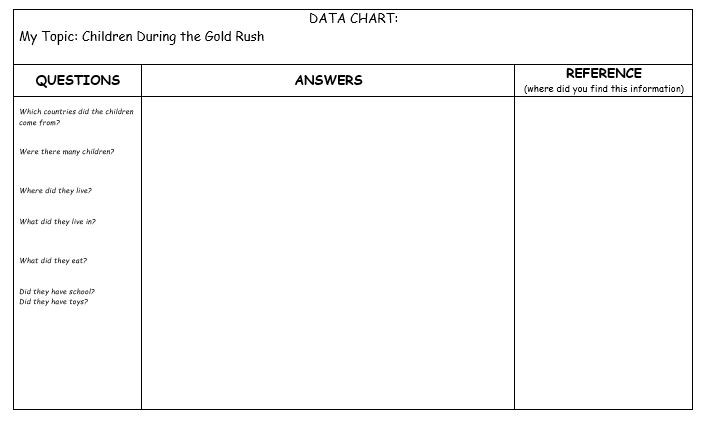
Use a data chart, like below, to collate information for your persuasive piece.
First, think of the questions you need answered for your topic.
Then spend time researching the answers.
Your teacher will provide some information in Google Classroom. ClickView is also a useful resource.
Remember to reference where you found your information.
(60-90 minutes)
Snapshot Writing
Imagine you are in the Goldfields in 1854.
Create a ‘snapshot’ of what it looks like, sounds like, feels like, smells like and tastes like.
Write this in the 'first' person and create a vivid experience for the reader.
This means you need to add enough detail so that it feels like the reader is experiencing it.
You could be a child, miner, housewife, shopkeeper, teacher, policeman etc.
(30 minutes)
Spelling
Learning Intention: To understand what a synonym is and how to use it in our writing
A synonym is a word or phrase that means exactly or nearly the same as another word or phrase in the same language, for example shut is a synonym of close.
Log into ClickView and then click here to find a further explanation about using synonyms in our writing.
Tasks:
Synonyms
Log into ClickView and then watch this clip here.
Use your knowledge of synonyms to change at least 10 of the words used in the song e.g. dig – plough, prod
(20 minutes)
Up Levelling your Snapshot
Using your completed writing snapshot, show examples of editing by using synonyms to improve your writing.
This is called ‘up levelling’ and is an important part of the editing process.
Make sure the editing is obvious for your teacher, e.g. different colour pen etc.
This task needs to be uploaded to Google Classroom or Sentral Parent Portal by Friday.
Success Criteria:
I have added 10 examples of synonyms to my writing snapshot
I have checked spelling throughout my writing snapshot for accuracy
I have shown evidence of editing for meaning, including correct punctuation
(30 minutes)
Maths
Learning Intentions:
To build understanding of fractions and decimals
To show evidence of problem solving strategies
Tasks:
Daily Maths Fluency:
Log into Essential Assessment and select Sunset Maths.
You should complete 5 minutes from this program per day to build your number fluency skills.
(5-10 minutes per day)
My Numeracy
Log into Essential Assessment.
Select Number and Algebra.
Select Fractions and Decimals or Real Number (or General All, if you have completed the other areas).
Select My Numeracy.
You should now see your Learning Goals. Begin working on your personalised goals.
If there are areas which you need support in, please remember to discuss with your teacher.
(20 minutes per day)
Problemo Maths tasks
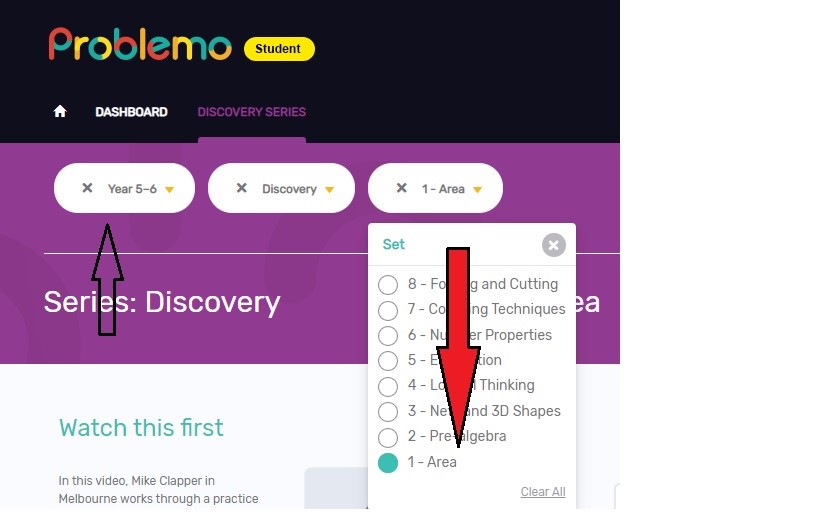
Click here to access Problemo. As a student, you do not need to log in to Problemo
Be curious about what you can find in this resource before Thursday's Webex.
Select a year level you'd like to explore (3-4, 5-6, 7-8 or 9-10).
Select Set 1. Work through the tasks in the set and show evidence of your working out in your work book.
You could work on these problems throughout the week or as a focus that fits into your own timetable.
Use the time as a guide for how many problems to complete.
These new resource will be discussed on Webex on Thursday, so make sure you have started the problems before Thursday’s Webex session.
(45 minutes)
P.E. / Movement breaks:
Learning Intentions:
We are learning to practise our skipping skills
We are learning to display resilience when we face challenges in skipping
We are learning to show curiosity and create a skipping routine
This week is our final week of practising our skipping skills.
We are so pleased to see that so many of you are sending videos and pictures into us through Sentral with all the amazing skipping skills you’ve demonstrated over the last few weeks.
This week we want to encourage you all to CREATE YOUR OWN SKIPPING ROUTINE!
A few reminders about your routine:
You may include
-music or a song into your routine
-at least 2 different styles of skipping that you have practised over the last few weeks
-any type of dance moves
-some running and skipping with your rope or forwards and backwards skipping.
If you are still finding skipping tricky, feel free to just spin the rope under your feet and step over it and create a dance routine (this is optional).
Just remember, skipping is really tricky. Don’t get down on yourself if you are finding it hard.
Keep your head high and do your best!
Log in to ClickView, then watch this Skipping Routine here to help you create your own skipping routine at home!
Log in to ClickView, then watch this Skipping Challenge here to see if you are as strong as Mr Marikar!
Inquiry – Australian History
Learning Intention:
To explore the Gold Rush period by reading and viewing
Task:
Who, What, Where, When and Why?
This week we are finding out about the Gold Rush.
There is a Student Booklet from ClickView here for you to record your responses.
If you can’t print this, you can record the answers in your workbook.
We will be discussing this task during our Webex Essential on Tuesday.
‘The Gold Rush’ and ‘The Eureka Stockade’ clips below, may help you answer the questions in your booklet.
Remember to log into ClickView first.
The Gold Rush: Life from the goldfields
The Eureka Stockade:
Click here
(50 minutes)
**Extension: If you choose to, you may wish to research further using ClickView and add more information to your booklet.
**Extension: Explore what life was like during the Gold Rush period through this interactive activity.
Good Luck! (It is fun!) – click here
Science - Essential Energy
Learning Intention:
To identify different types of energy and how it is used in the home
Task:
Energy Transfer or Transformation
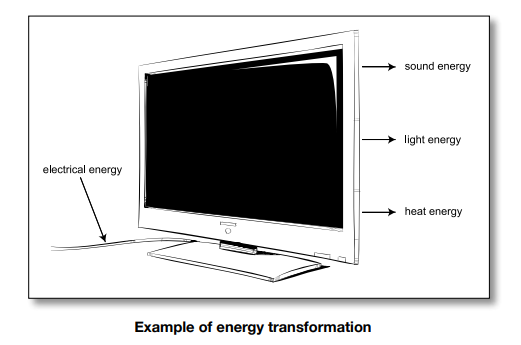
A ‘transfer of energy’ is the movement of one type of energy from one place to another. For example, a lever transfers moving energy from one side to another.
A ‘transformation of energy’ is when one energy type takes on another form. For example, a television transforms electrical energy into sound, light and heat energy.
Tasks:
Energy Transfer or Transformation
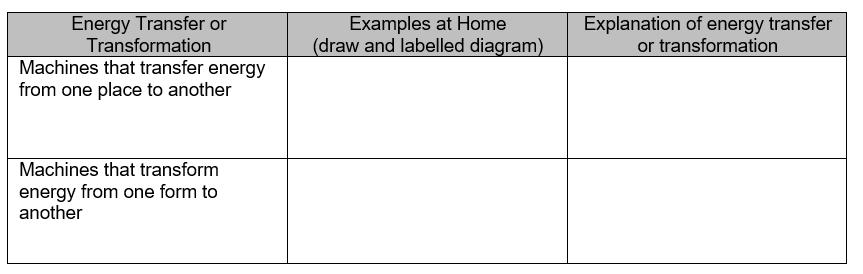
Identify examples of machines in your home that transfer energy and those where there is a transformation of energy.
Rule up the following table in your book and complete as indicated:
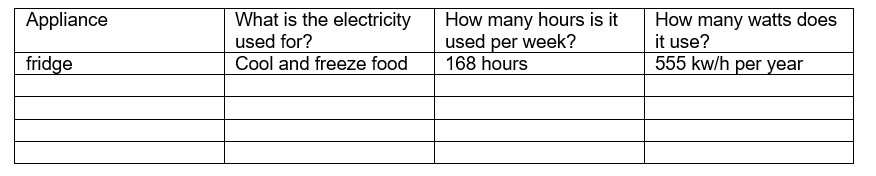
Auditing Home Appliances
Look at appliances in and around your home and identify what the electricity is used for. For example, to heat something, to make something move, or to produce light or sound.
If you have past electricity bills, this might be helpful to see when spikes of energy usage occur in the home.
Record the information into the table below, along with an estimation of how often the appliance is used in a standard week. Can you determine how many watts the appliance uses? This information is often recorded on the appliance.
There is an example provided to help.
Self-Reflection:
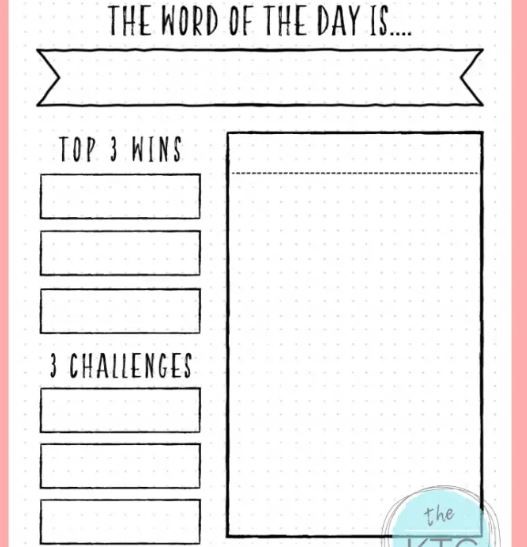
Complete the reflection below about your week of Learning from Home.
Learning from Home includes your Webex meetings and organisation as well as the tasks.
The box could include a drawing, wordsplash, etc.
The ‘Word of the Day’ is a word that best describes your feelings about the week.
Click here for the other Specialist options
Gold Rush Answer Booklet click here.
© Copyright Laburnum Primary School