
Year 2 Learning from Home Week 3 Term 3
Week beginning – 3 August 2020
This term, we would like you to upload some specific tasks to the Sentral Parent Portal.
These tasks will be highlighted like this.
These tasks will give your teachers the opportunity to provide feedback on your learning, in addition to Webex sessions.
Webex Essential Schedule
Below is a list of what we plan to do in our Webex Essential sessions:
Monday: Phonological Awareness, Vocabulary – word of the week
Tuesday: Phonological Awareness, Writing – share information report topic, Reading – non-fiction genre features
Wednesday: Word of the week, Writing – mind map
Thursday: Phonological Awareness, Maths – doubles
Friday: Word of the week, Wellbeing – Acts of kindness
Wellbeing
Resilience, Rights and Respectful Relationships
Learning intention:
We are learning to identify times when you have shown an act of kindness to a friend or family member.
Task:
Acts of kindness are things we do for other people without wanting something in return.
Some acts of kindness are listed below.
- Offer to help someone
- Smile at someone
- Hold the door open for someone
- Let another person have a go at something first
- Give an honest compliment or give some positive feedback to someone
- Write a thank you note or letter to someone who has helped you
- Make a card for a family member to tell them how special they are
Think about a time when you have shown an act of kindness to a friend or family member.
How did they react?
How did it make you feel?
Think about a time when a friend or family member has shown you an act of kindness.
How did it make you feel?
How did they react?
In your scrapbook, draw a picture and write a sentence about a time you have shown an act of kindness to another person, and a time when a friend or family member has shown you an act of kindness.
This week, we challenge you to do at least two acts of kindness for a friend or family member.
Be ready to share these acts of kindness during our Webex Essential session on Friday.
Reading
- Each day you need to read a book to someone from your Bug Club or Rapid Readers.
Choose both fiction and non-fiction books to read. Together, talk about the quiz questions before you answer them.
Remember, you can look back at the page to help you find the answers.
When you finish a book, spend five minutes discussing the book with the person you read to, using some of the following prompts.
Fiction Text
- Retell the story including the main events in the beginning, middle and end of the story using the characters names.
- What text to self-connections can you make?
- Why do you think the author wrote this book?
- What does the author do to keep you interested?
Non-fiction Text
- What did you learn from this book?
- Talk about the important information the author is telling you about the text.
- What are the features of a non-fiction text?
(15 - 20 minutes each day)
Learning Intention:
We are learning to recognise features in non-fiction texts.
Tasks:
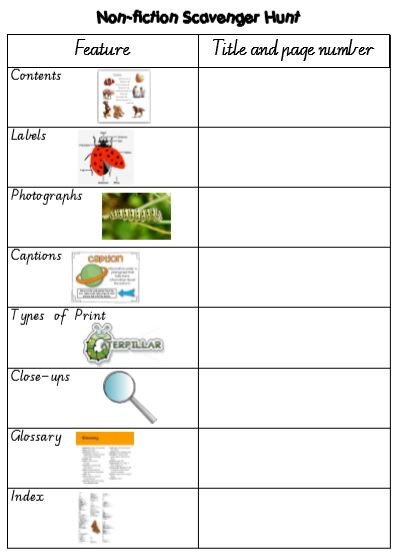
- Copy the table below into your scrapbook.
Click here to log onto Epic! In your mailbox, find the collection LPS Year 2 Non-fiction Topics.
Look through these books to find examples of non-fiction text features. Record the title of the book and the page number the feature is found on.
(30 minutes)
Learning Intention:
We are discussing the purpose of non-fiction text features.
Task:
- This task will be taught during the Webex Essential session on Tuesday.
Learning Intention:
We are identifying interesting facts in non-fiction texts.
Task:
- The purpose of a non-fiction text is to inform the reader about a topic.
Click here to log onto Epic! In your mailbox, find the collection LPS Year 2 Non-fiction Topics.
Look through and read a book that interests you or choose a non-fiction book from home to read.
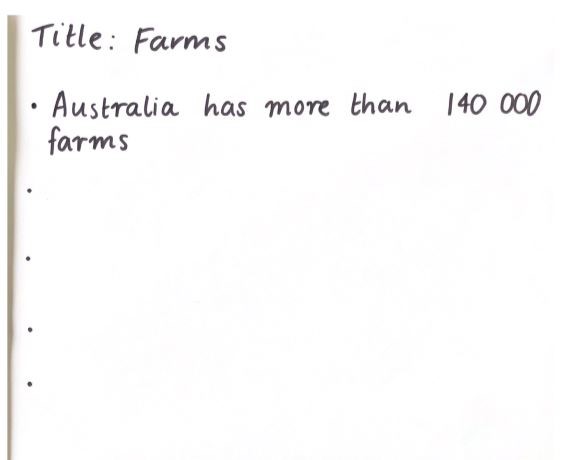
Record the title of the book and at least three interesting facts or something you have learnt.
Look at the example below.
(30 minutes)
Learning Intention:
We are making an anchor chart about non-fiction text features.
Task:
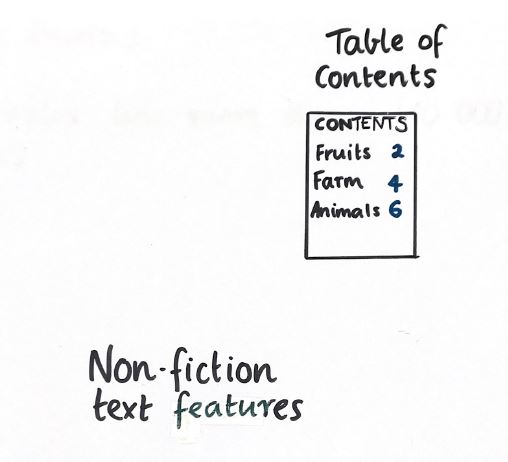
- In your scrapbook write Non-fiction text features in the middle of your page.
Write and draw an anchor chart showing all that you know about the features of non-fiction texts.
Please include examples of each feature.
Look at the example below.
Please ask a parent to take a photo of your anchor chart and upload it to the Sentral Parent Portal for Friday’s Webex Check In session. We will be giving feedback on your anchor chart using the success criteria below.
Success Criteria:
- I identify and name non-fiction text features
- I give examples of non-fiction text features
(30 minutes)
Writing
Learning Intention:
We are choosing a topic to write an information report about.
Task:
- You will be planning an information report about a topic that interests you.
Click here to log on to Epic! In your mailbox, find the collection LPS Year 2 Non-fiction Topics.
Look through this collection and find a topic to write about. You can also use books from home.
Find a topic that you know a lot about or something that really interests you.
Be ready to share your topic during our Webex Essential session on Tuesday.
(20 minutes)
Learning Intention:
We are creating a mind map about a topic of our choice.
Task:
- You will be creating a mind map about the topic you have chosen.
In your scrapbook write your topic in the middle.
On the page write down as many things you have discovered about your topic.
Don’t forget to use the books on Epic or write down what you already know.
Look at the example below.

Please bring your mind map to our Webex Essential session on Wednesday.
Success Criteria:
- I selected a topic that interested me
- I wrote the topic in the middle of the page
- I included facts and detail about the topic
(40 minutes)
Learning Intention:
We are learning to sort information into categories.
Task:
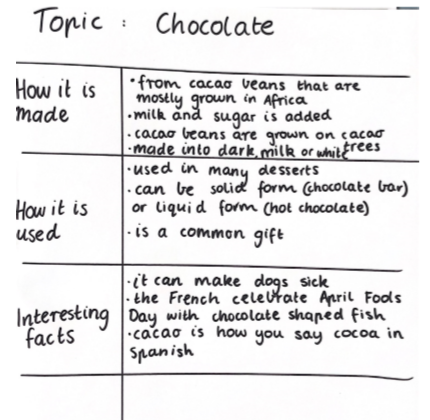
- Using your mind map, sort the information you have gathered into categories. See the example below.
This task will be explained in our Webex Essential session on Wednesday.
Please do not complete this task until after the session.
(30 minutes)
Vocabulary
Learning Intentions:
We are investigating a word of the week.
Tasks:
- We will be investigating the meaning of a word and the different ways we can use it when writing and speaking.
Words will be introduced and discussed during Webex sessions on Monday, Wednesday and Friday.
Maths
Learning Intention:
We are developing our automatic recall of doubles.
- Fluency Activity - to be completed daily
Click here to play Hit the Button. Click on the yellow circle, Doubles.
Start with doubles to 10. If you would like, try playing Hit the Button with doubles to 15 and 20.
(Up to 15 minutes)
Tasks:
- Click here to log onto ClickView.
Watch the video Two of Everything.
In your scrapbook draw the table below.
Place a deck of cards face down.
Turn over the first card and write the number under the headings ‘Number’ and ‘Magic Pot Doubles’.
Record the answer under the heading ‘Total’. Repeat this at least five times. (Tip: Ace = 1, Picture cards = 10 and if you turn over the same number, choose another card)
(30 minutes)
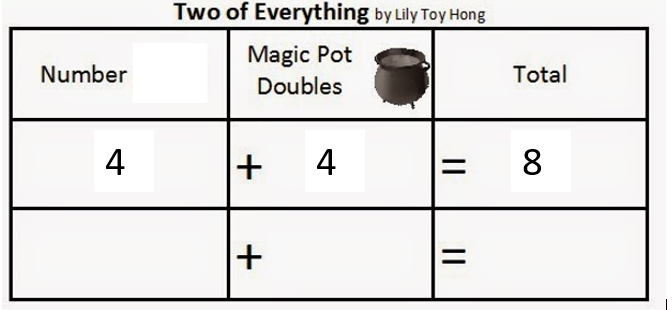
- Further work on doubles will be taught during the Webex Essential session on Thursday.
Learning Intention:
We are comparing the mass of objects using hefting.
Task:
- Click here to log onto ClickView.
Watch the video Introducing Mass.
Hefting is holding two objects and deciding which is the heaviest.
Click here to watch a video demonstrating how to correctly compare the mass of objects by hefting.
In your scrapbook copy the following table.
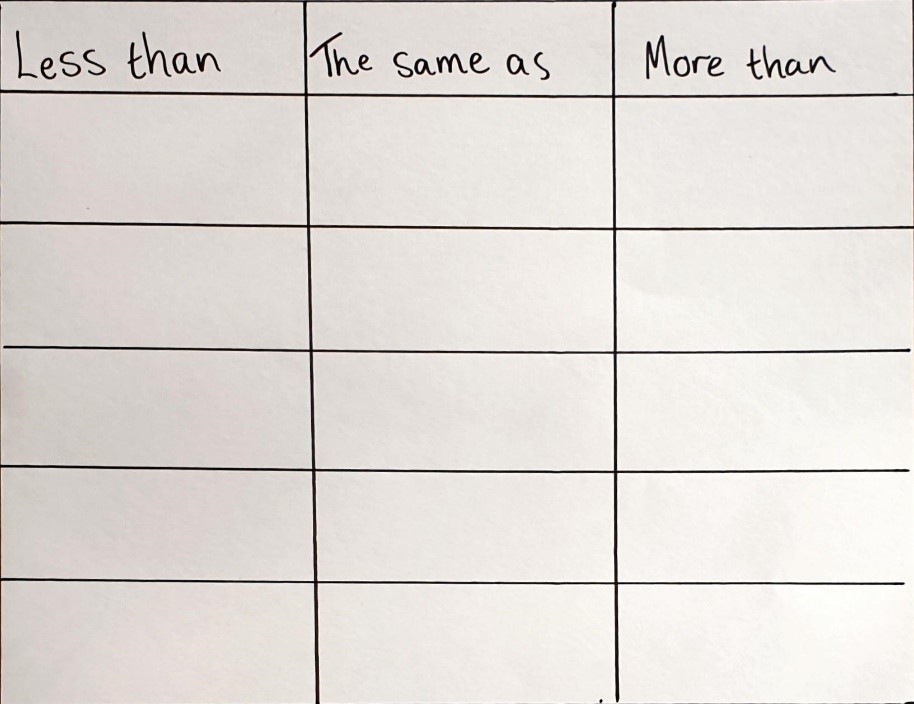
Find a small closed bag of pasta, rice, flour or sugar. Hold the bag in one hand. Using hefting, find three items heavier, three items lighter and one item about the same weight/mass. Record these in the table.
(30 minutes)
Learning Intention:
We are learning to compare the mass of objects.
Task:
- Find two shopping bags that are the same (for example, two plastic bags or two supermarket bags) and a coat hanger. Attach the bags to each end of the coat hanger.
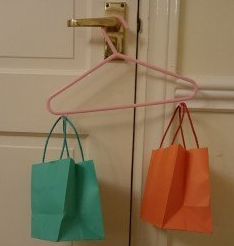
Investigate comparing the mass of different objects by putting one object in each bag and holding the coat hanger by the hook. The object that is heavier will drop lower and the lighter object will be higher.
Record your findings, for example, I put a book in one bag and a spoon in the other. I found the book was heavier than the spoon.
(30 minutes)
P.E./Movement breaks
Learning Intentions:
We are learning to practise our skipping skills.
We are learning to explore a range of skipping skills.
We are learning to develop resilience when we face challenges in skipping.
Spend a few minutes on your forward, backwards and ski skipping from last week.
Remember to always find a safe space (inside/outside) to practise.
If you don’t have a skipping rope, you can use a hula hoop or simply jump back and forth over a line on the ground.
Optional – Take a video or some pictures of you completing some of the skipping challenges and send them via Sentral to either Mr Marikar or Mrs Yue-Lamb.
CHALLENGE 1: Log on to ClickView, then click here to watch Mrs Yue-Lamb practise the Twist!
CHALLENGE 2: Log on to ClickView, then click here to watch Mrs Yue-Lamb practise the Can Can!
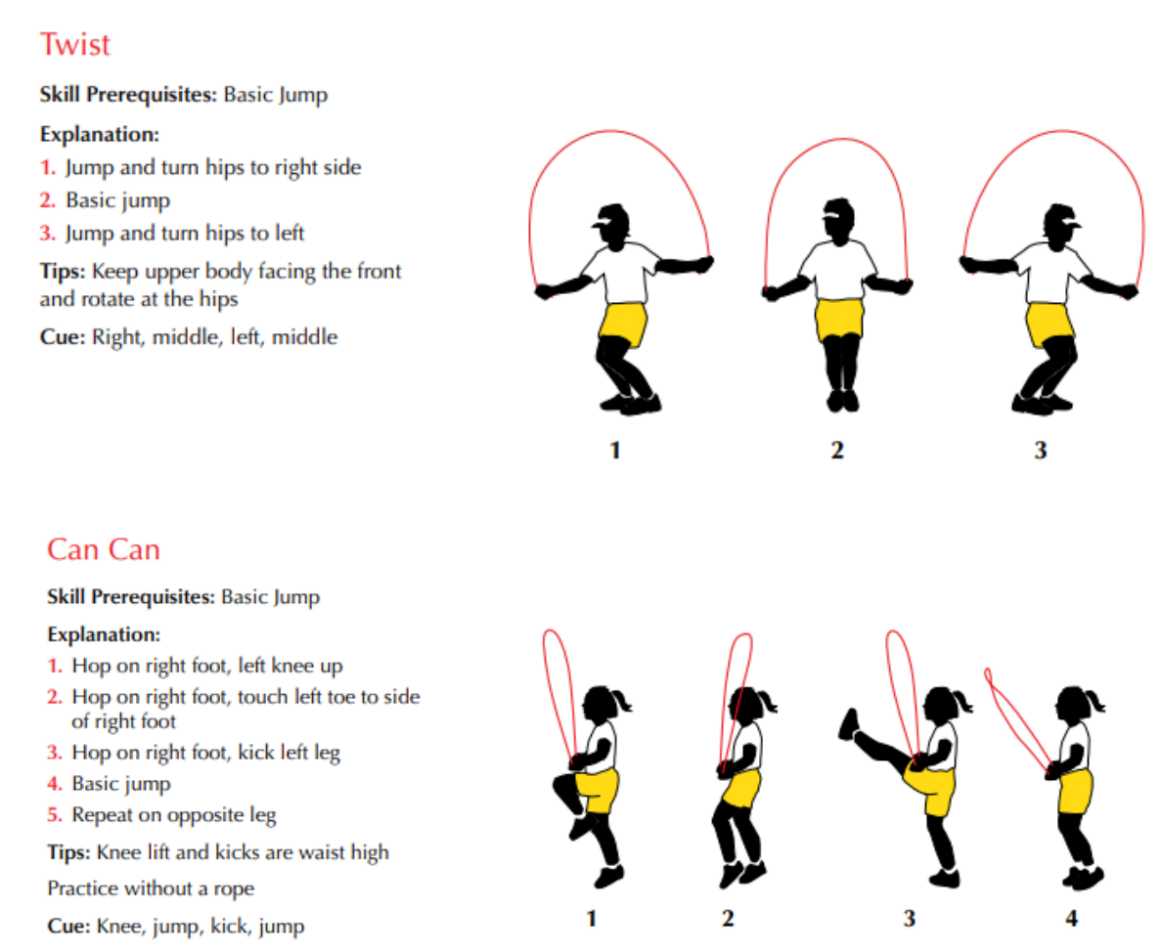
Bonus Challenge: First to 100
If you can do 1 skip = 10 Points
If you can do 2 skips in a row = 20 Points
If you can do 3 skips in a row = 30 Points
If you can do more than 5 skips in a row = 50 Points.
Have as many practices as you can. Add up your points to see if you can get to 100 points.
For example, if you do 10 x 1 skips you would get to 100 points, or if you did 5 x 2 skips in a row you would get to 100 points.
Inquiry
Learning Intention:
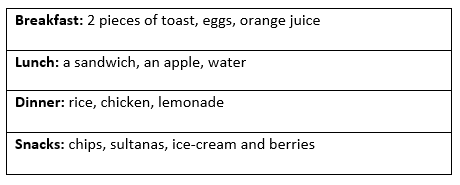
We are learning to record what we eat and drink for the day in a food diary.
Task:
- Draw or write everything you eat and drink during a day in a food diary. Look at the example below.
Science
Learning Intention:
We are investigating mixtures we use at home.
Task:
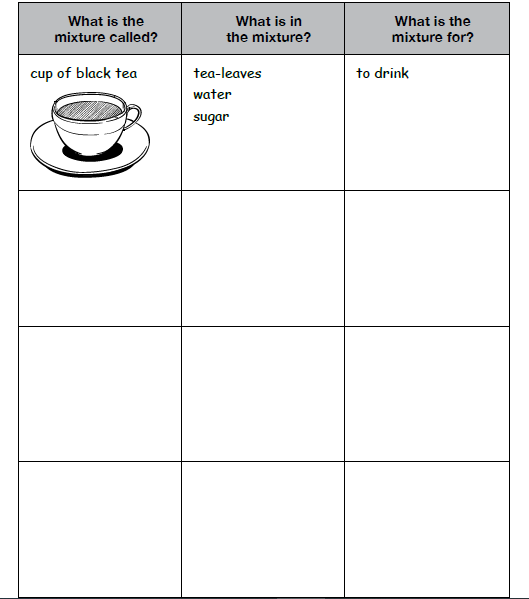
- This week we will be exploring everyday mixtures we have at home, what is in the mixture and what it is used for.
Some examples of simple mixtures you may see at home include breakfast cereals, salad or a cup of tea.
When dishes are washed, you may see your parents make a mixture with detergent and water.
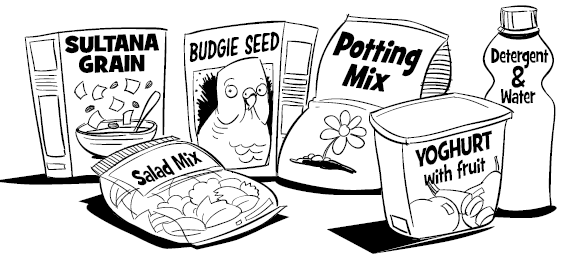
Copy the table below into your scrapbook.
Write the heading, ‘Mixtures I have at home’.
Find some examples of everyday mixtures you see at home and record them in the table.
Self-reflection:
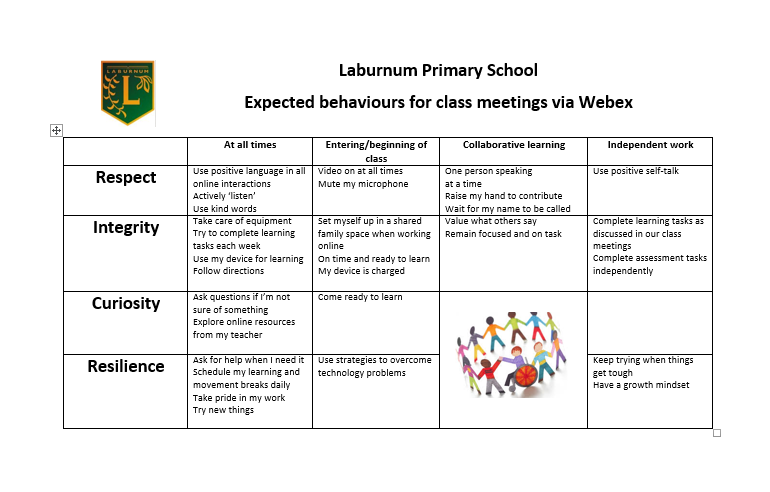
- Which of the school values have you demonstrated this week while Learning from Home?
Be ready to share your reflection during our Webex Essential session on Friday.
Click here for the other Specialist options.
© Copyright Laburnum Primary School