
Year 2 Learning from Home Week 2 Term 3
Week beginning – 27 July
Below is an EXAMPLE of a weekly timetable that could be used to help plan out weekly learning tasks. Although this is a five day timetable, please plan your week around the days your family uses for Learning from Home. Please remember your Webex sessions as well!
| Monday | Tuesday | Wednesday | Thursday | Friday | |
| Session 1 | Reading Task (Independent reading) | Independent Reading and Reading Task | Independent Reading and Reading Task | Independent Reading and Reading Task | Independent Reading and Reading Task |
| Break | |||||
| Session 2 | Writing Task | Writing Task | Writing Task | Spelling Task | Writing Task |
| Brain break | |||||
| Session 3 | Maths Task | Maths Task | Maths Task | Specialist | Maths Task |
| Lunch | |||||
| Session 4 | Wellbeing Task | Inquiry Task | Inquiry Task | Specialist | Specialist |
Webex Essential Schedule
Below is a list of what we plan to do in our Webex Essential sessions:
Monday: Vocabulary - word of the week; review Learning from Home planner
Tuesday: Writing - preparing to write Information reports (watch ClickView writing videos before attending today’s session); 10 minute Phonological Awareness
Wednesday: Maths - Revising number facts to 10 (come with a ruled up facts to 10 table)
Thursday: Reading - discussing and looking at examples of non-fiction text feature
Friday: Writing - Sharing and feedback of information reports and self-reflection; 10 minute Phonological Awareness
Wellbeing
Resilience, Rights and Respectful Relationships
Learning Intention:
We are learning to identify our personal strengths.
Task:
Personal strengths are positive parts about ourselves. They are adjectives we use to describe ourselves and how we treat others.
Kindness, helpfulness, curiosity and respectfulness are all examples of personal strengths you may have.
Look at the picture below for some more examples.
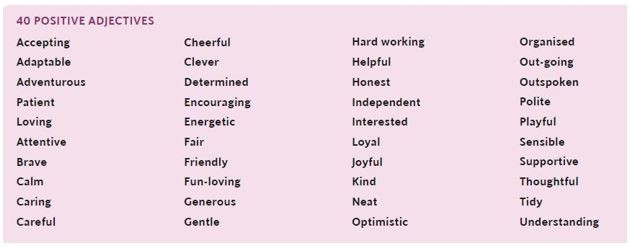
- Choose 6 personal strengths that describe you. Write these down in your book.
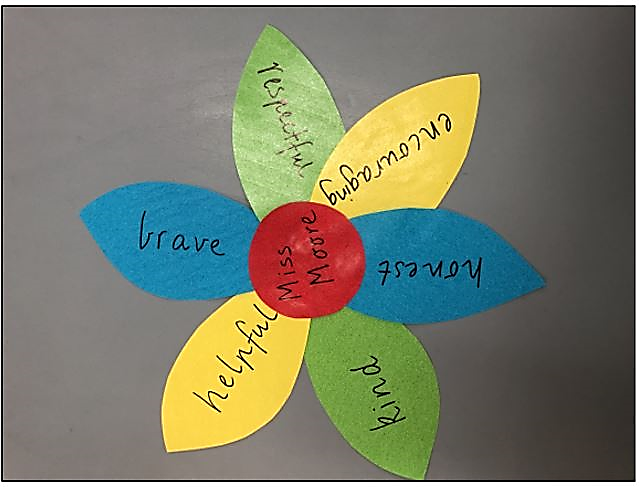
We would like you to create a personal strength flower to display in your room.
You can use coloured paper, a few pages in your scrapbook, or any paper you have at home.
Follow these instructions.- Draw and cut out 6 petals for your flower
- Cut out a circle for the middle of your flower
- Arrange the petals like a flower
- Paste the circle in the middle
- Write your name in the middle circle
- Write your six personal strengths on each petal
Look at the picture below for an example. Display your finished flower in your room.
Reading
- Each day you need to read a book to someone from your Bug Club or Rapid Readers.
Choose both fiction and non-fiction books to read.
Together, talk about the quiz questions before you answer them.
Remember you can look back at the page to help you find the answers.
When you finish the book, spend five minutes discussing the book with the person you read to, using some of the following prompts.
Fiction Text
Retell the story including the main events in the beginning, middle and end of the story using the characters names.
What text to self-connections can you make?
Why do you think the author wrote this book?
What does the author do to keep you interested?
Non-fiction Text
What did you learn from this book?
Talk about the important information the author is telling you about the text.
What are the features of a non-fiction text?
(15 - 20 minutes daily)
Learning Intention:
We are learning to understand the purpose of special print in a non-fiction text.
Task:
- When a word is bold, in italics, or underlined, it is an important word for the reader to know.
Here is an example of special print on a page.
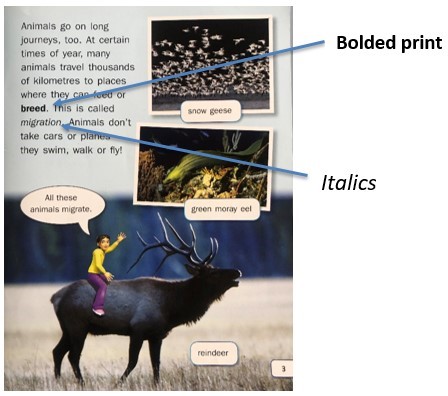
Click here to log onto Epic! Choose a non-fiction text to read that includes special print.
After reading, copy the sentence that includes an example of special print into your book.
Circle or underline the word that is bold, italic or underlined.
In your own words, write a sentence explaining why special print is important for readers.
(15 – 20 minutes)
Learning Intention:
We are learning to identify the purpose of labelled diagrams in a non-fiction text
Task:
- A labelled diagram is an image used to help the reader visualise what the author is describing.
Here is an example of a labelled diagram.
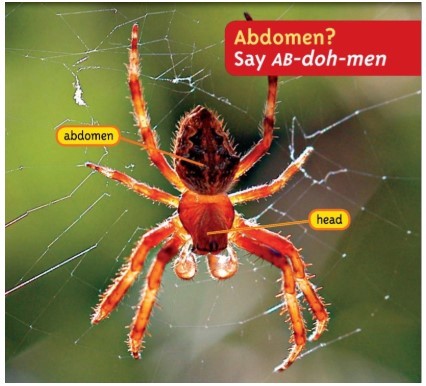
Click here to log onto Epic! Choose a non-fiction text to read that includes a labelled diagram.
After reading, copy the labelled diagram into your book.
In your own words, write a sentence explaining why labelled diagrams are important for readers.
(15 - 20 minutes)
Learning Intention:
We are learning to identify the purpose of photographs and illustrations in non-fiction texts.
Task:
- Photographs and illustrations are used to help the reader understand more about the topic.
Here is an example of a photograph and an illustration.
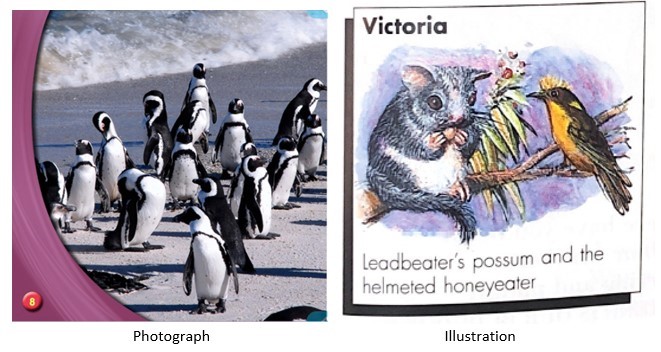
Click here to log onto Epic! Choose a non-fiction text to read that includes a photograph and or an illustration.
After reading, draw or print out the photograph or illustration into your book.
In your own words, write a sentence explaining photographs and illustrations are important for readers.
(15 – 20 minutes)
Learning Intention:
We are learning to identify the purpose of captions in a non-fiction text.
Task:
- Captions help the reader understand a picture or photograph.
Here is an example of captions in a text;
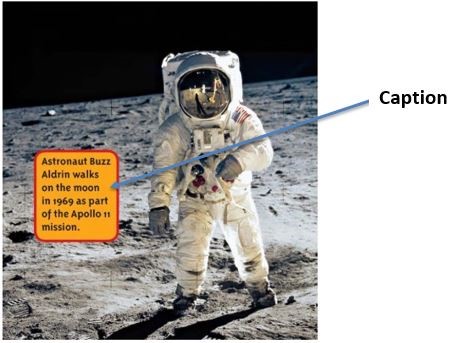
Click here to log onto Epic! Choose a non-fiction text to read that includes captions. After reading, copy the caption into your book. In your own words, write a sentence explaining why captions are important for readers.
(15 – 20 minutes)
Writing
Learning Intention:
We are learning to write an information report about ourselves.
Task:
- An information report is a type of non-fiction text.
Click here and log in to ClickView. Click here to watch a video explaining what information text types are.
Click here and log in to ClickView. Click here for another video about how to write an information report.
Make sure you watch these two videos before Tuesday’s Webex Essential session.
(15 minutes)
Learning Intention:
We are learning to write an information report about ourselves.
Task:
- This task will be taught during Tuesday’s Webex Essential session.
Learning Intention:
We are learning to write an information report about ourselves.
Task:
- Continue writing your information report and refer back to the videos on writing an information report to help you set it out.
Please ask a parent to take a photo of your information report and send it to your teacher's mailbox on Sentral before Friday’s Webex Check In session.
We will be giving feedback on your information report using the success criteria.
(60 minutes over a few days)
Learning Intention:
We are using the success criteria to check our information reports.
Task:
- Sharing and feedback will be the focus during the Friday Webex Check-in session. Please join us for that!
Success Criteria:
I identify the features of a non-fiction text.
I write an information report about myself.
Vocabulary
Learning Intention:
We are investigating a word of the week.
Task:
We will be investigating the meaning of a word and different ways we can use it when writing and speaking.
Words will be introduced and discussed during Webex Essential meetings on Monday, Wednesday and Friday.
Handwriting:
Learning Intention:
We are forming the letters r and u correctly.
Task:
- Look at the handwriting example below.
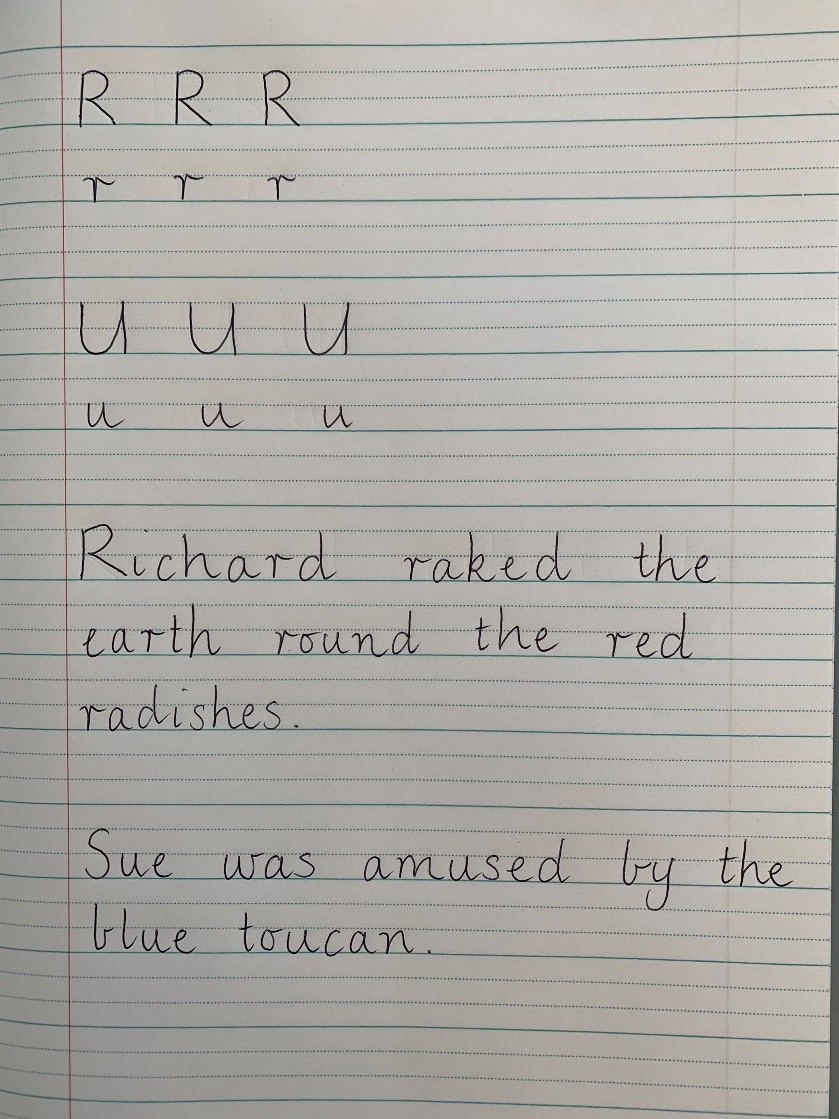
Copy and continue the handwriting into your lined book. Remember to use correct posture and pencil grip. You could also create your own sentences using words with r and u.
Click on the link below to watch how to correctly form the letters r and u. (You may need to log into ClickView first)
(20 minutes)
Maths
Learning Intention:
We are developing our automatic recall of number facts.
Task:
- Click here to play Hit the Button. Click on the green circle, Number Bonds.
Number bonds are numbers that add to make 10, 20 or 100.
These are also called number facts. Start with number bonds to 10.
If you would like, try playing Hit the Button with number bonds to 20 and 100.
(fluency to be completed daily- up to 15 mins)
Learning Intention:
We are learning efficient strategies for adding numbers to ten.
Task:
- Facts of 10 are pairs of numbers that add to 10, for example, 3 and 7 make 10 (Number bonds).
Click here and log in to ClickView. Click here to watch a video on facts of 10.
After watching the video, draw your own facts of 10 rainbow in your book.
Click here and log in to ClickView. Click here to watch another video about facts of 10. - Copy the following table on a double page in your scrapbook ready for Wednesday Webex Essential meeting.
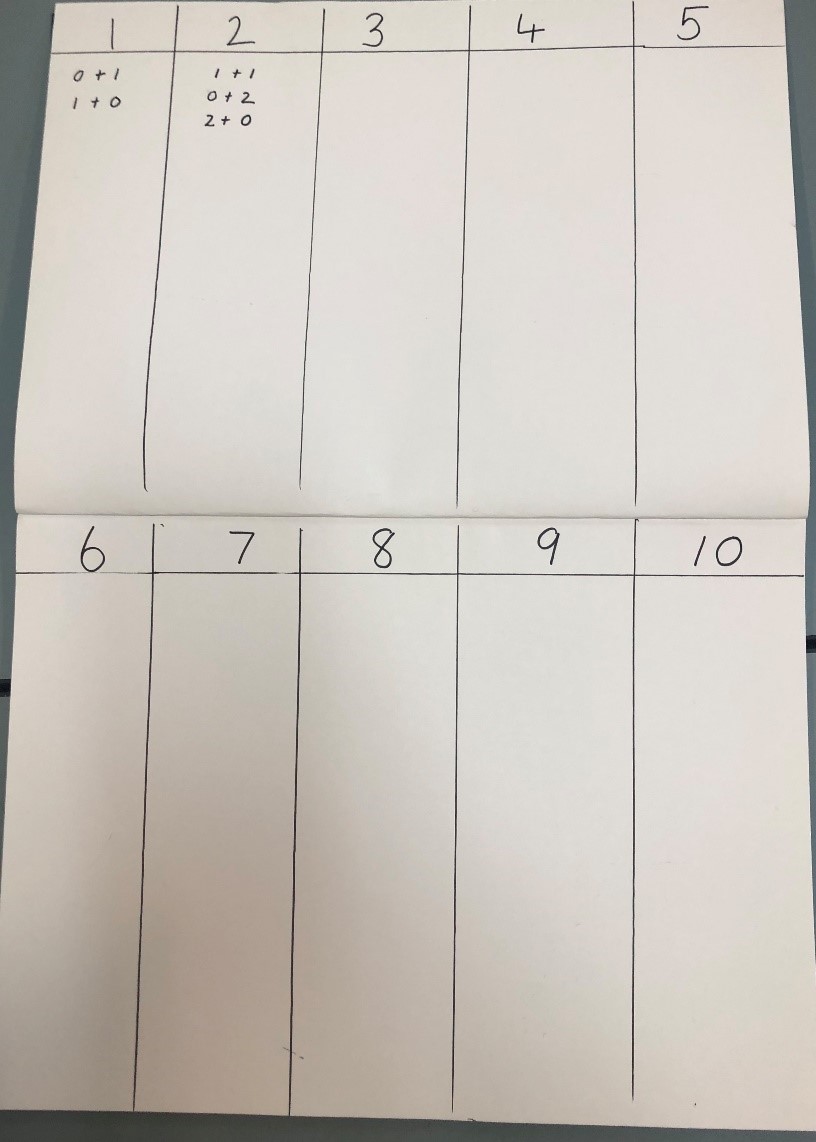
Learning Intention:
We are finding the capacity of different containers
Task: (this can be done over 2 days)
- Capacity is how much a container can hold.
Click here to watch a video on ABC Education about capacity.
Click here and log in to ClickView. Click here to watch a video about capacity. This is quite a long video.
The most important part starts at 5 minutes and finishes at 7 minutes.
If you have time, you can watch the whole video.
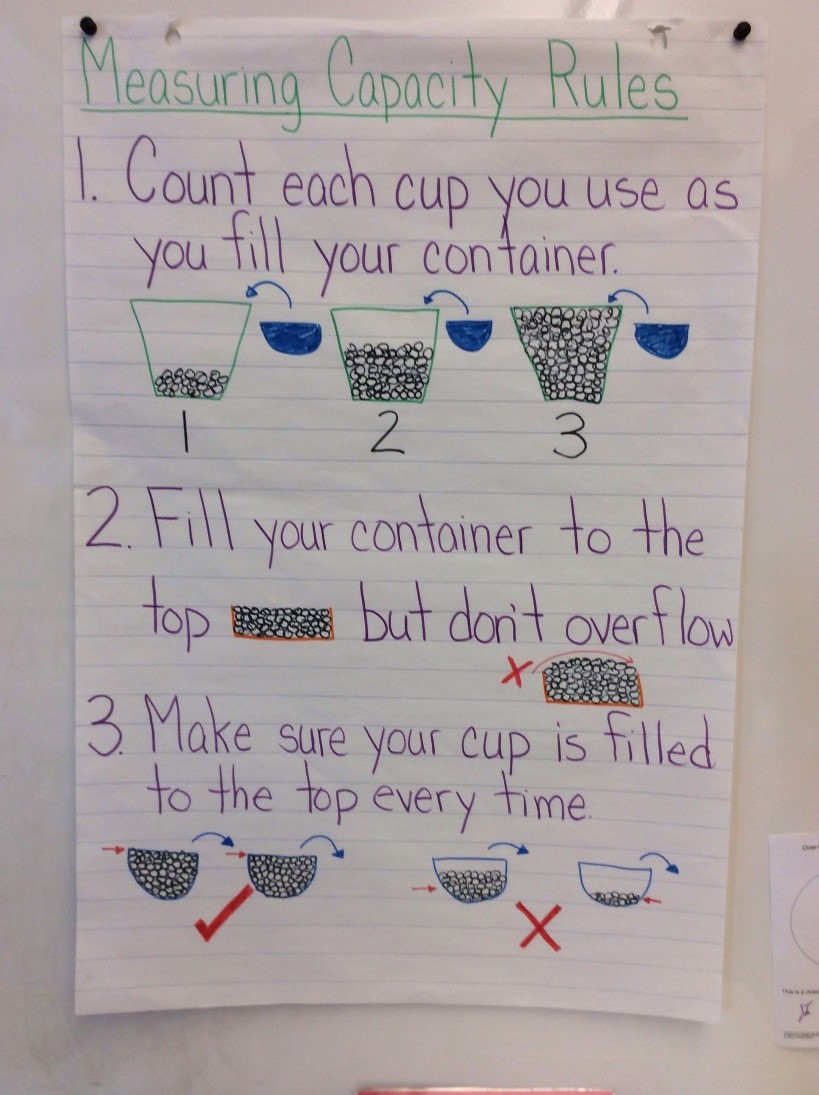
Find 4 different sized containers at home and a cup.
Use water, rice or pasta to find the capacity of these containers.
Count how many cups you used to fill each container.
In your scrap book record how many cups it took to fill each container.
For example, the capacity of this container is 5 cups.
Learning Intention:
We are measuring and recording capacity using a range of different containers.
Task:
- You will need a small container, such as a cup, and a large container, such as a jug or a bowl.
How many small containers do you think it would take to fill the large container (estimate).
Fill the small container with water and pour it into the large container.
As you are pouring, count how many small containers it takes to fill up the large container.
Repeat this until the large container is filled with water.
Click here and log in to ClickView. Then click here to watch an example with Ms. Moore.
Record this in your scrap book. See the example below.
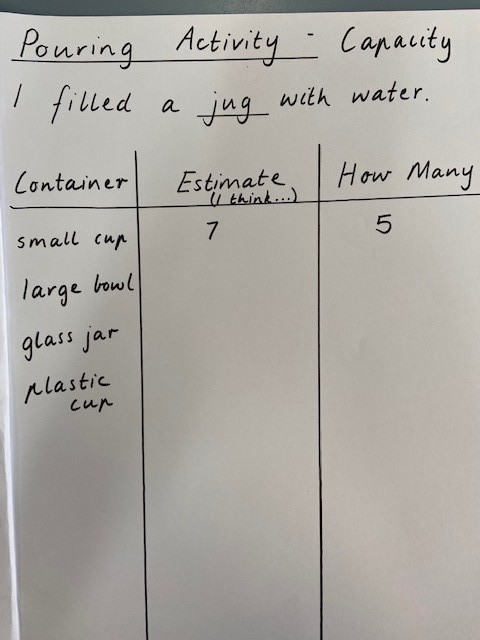
Use different small containers to fill the same large container and record it in your scrap book.
What did you discover about the different sized small containers?
When you have finished, think of ways to reuse the water instead of tipping it down the sink.
P.E./Movement breaks:
Learning Intentions:
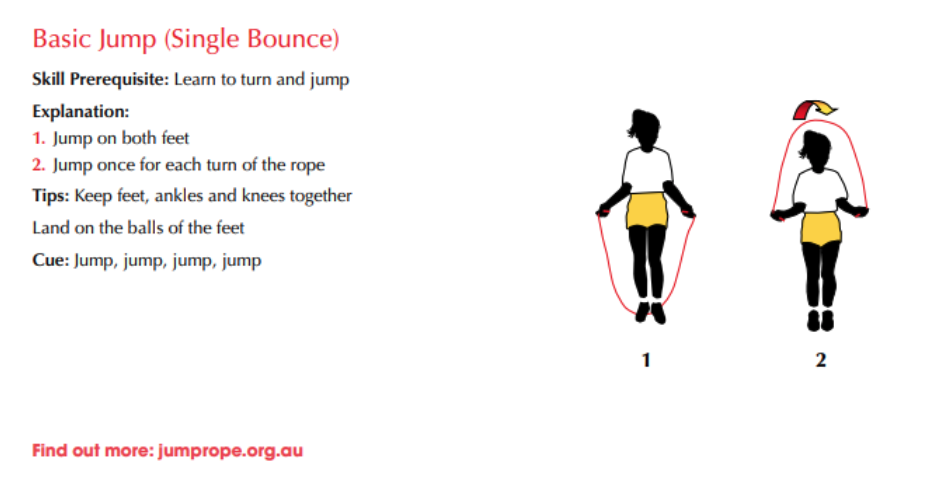
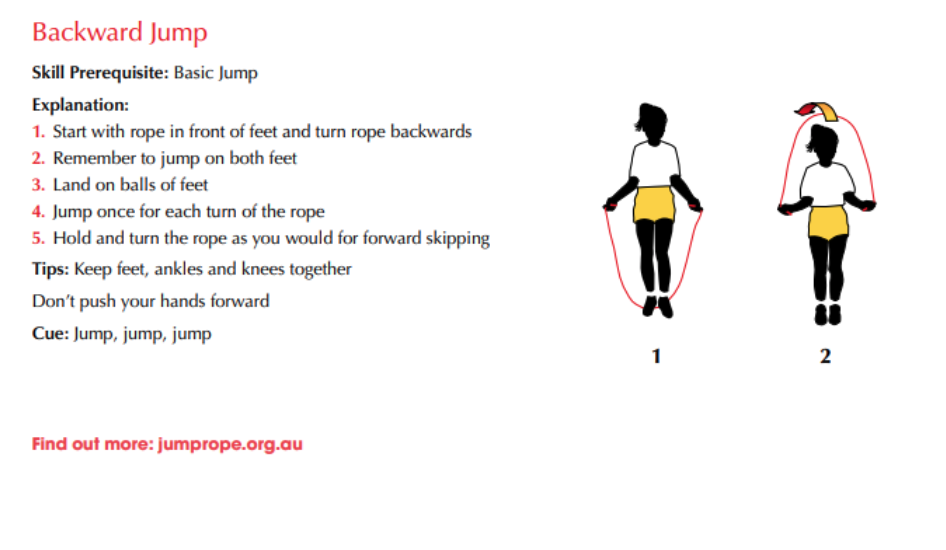
We are learning to practise our skipping skills
We are learning to explore a range of skipping skills
We are learning to develop resilience when we face challenges in skipping
Last week our focus was developing our skipping skills. Hopefully most of you have had some practise with some of the skills you learnt. This week we are going to continue practising so we get better each week.
Remember to always find a safe space (inside/outside) to practise spinning the rope over your head and jumping over the rope. If you don’t have a skipping rope, you can use a hula hoop, a spare rope or simply jump back and forth over a line on the ground. Once you are able to spin the rope over your head, practise forward and backward skipping.
Optional – Take a video or some pictures of you completing some of the skipping challenges and send them via Sentral to either Mr Marikar or Mrs Yue-Lamb.
CHALLENGE 1: Single Bounce
CHALLENGE 2: Backward Jump
CHALLENGE 3: Skier
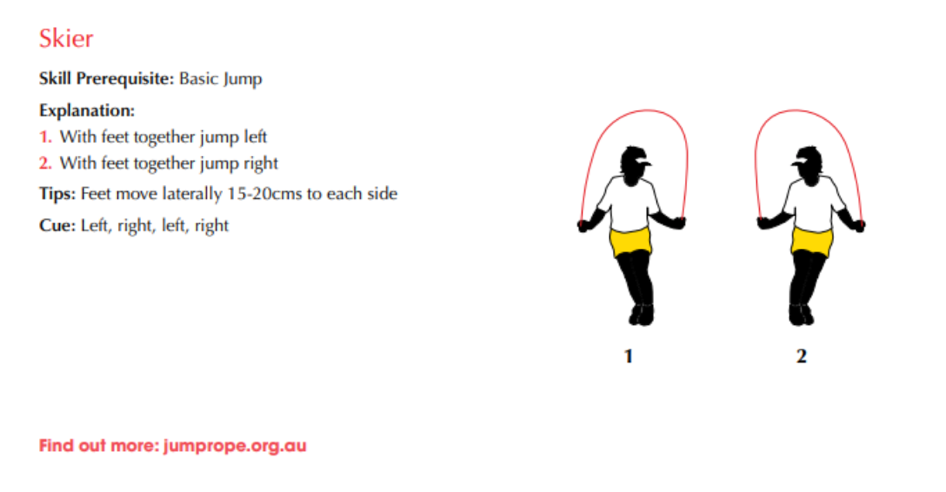 Bonus Challenge: First to 100
If you can do 1 skip = 10 Points
If you can do 2 skips in a row = 20 Points
If you can do 3 skips in a row = 30 Points
If you can do more than 5 skips in a row = 50 Points.
Have as many practises as you can. Add up how your points to see if you can get to 100 points. For example, if you do 10 x 1 skips you would get to 100 points, or if you did 5 x 2 skips in a row you would get to 100 points.
Inquiry
Learning Intention:
We are learning to identify foods and think about where food comes from.
Task:
- Draw the table below in your work book. Label and draw the food in the first column.
In the second column write where you think the food comes from.
Challenge: Add your favourite foods to the table!
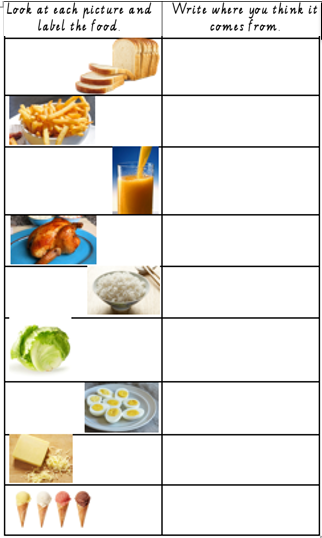
After completing this activity click here to read ‘Where does food come from?’
Add any new ideas to your table.
Science
Learning Intention:
To compare different mixtures
Tasks:
- Look at the pictures below. Think about the following-
- What is similar about the pictures?
- What is different?
- I wonder….
- I noticed…
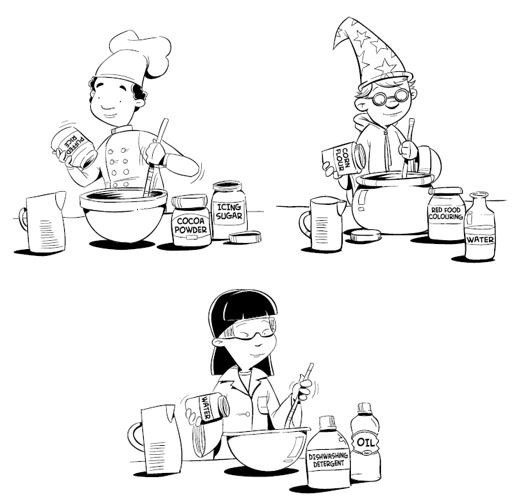
In your scrapbook, write the title Comparing Mixtures.
For each picture, record what you think the person is making and draw a small picture of what you think each mixture may look like.
Self-reflection:
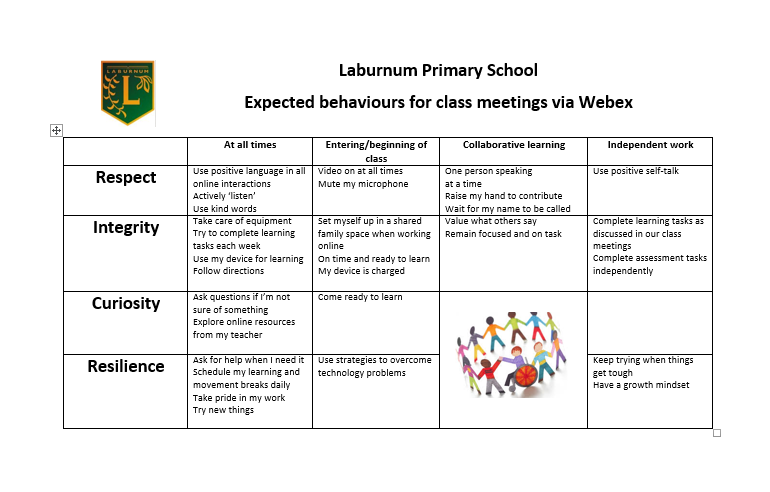
- Which of the school values have you demonstrated this week while Learning from Home?
Be ready to share your reflection during the Webex meeting on Friday.
Click here for the other Specialist options.
© Copyright Laburnum Primary School