
Year 1 Learning from Home Week 1 Term 3
Week beginning 20 July 2020
These tasks need to be completed in your pink lined book with the date written at the top of the page.
Reading
Learning Intentions:
We are learning to explore our reading resources, including Epic!, Bug Club, StoryBox Library and Sunshine Online
We are learning to build our reading stamina by reading independently for 20 minutes
We are learning to ask and record questions on a sticky note before we start reading (this will be covered in our Webex Essential session on Friday)
We are learning to keep a log of our daily reading
Tasks:
- In your pink lined book, write a list of 3 topics that you might be curious to read about.
Using the search bar on Epic! or Story Box Library, try to find some books relating to the topic you are curious about and read them.
You may also choose to explore Sunshine Online and choose some books of interest to read.
(50 minutes) - It is really important that when we read, we are able to concentrate on our book for a long time.
Find a quiet, comfortable place in your house to read a Just Right Book that has been assigned to you on Bug Club or Epic! (including books you may have already read).
This should look just like independent reading at school and you can do it every day.
(20 minutes) - Complete the following task after Friday’s Webex Essential session:
Before you start reading a new book, have a look at the front cover and the title.
What are some questions you have about this book? Write down 2 questions on your sticky notes.
Read the book. Were your questions answered?
Stick your questions into your pink lined book at the end of reading.
Make sure you include the date and the title of the book at the top of the page.
(30 minutes) - Every day when you read, you are expected to record what you have read, the pages you have read and the date you read in your yellow reading log.
If you don’t have one, you can record this at the back of your pink lined book.
(5 minutes).

These tasks need to be completed in your pink lined book with the date written at the top of the page.
Writing
Learning Intentions:
We are learning to show everything we know about poetry
We are learning to hunt for adjectives in books and record them on an alphabet chart
We are learning to write an acrostic poem for the word ‘student’
Tasks:
- Draw or write everything that you know about poetry.
You can write sentences, words or draw pictures.
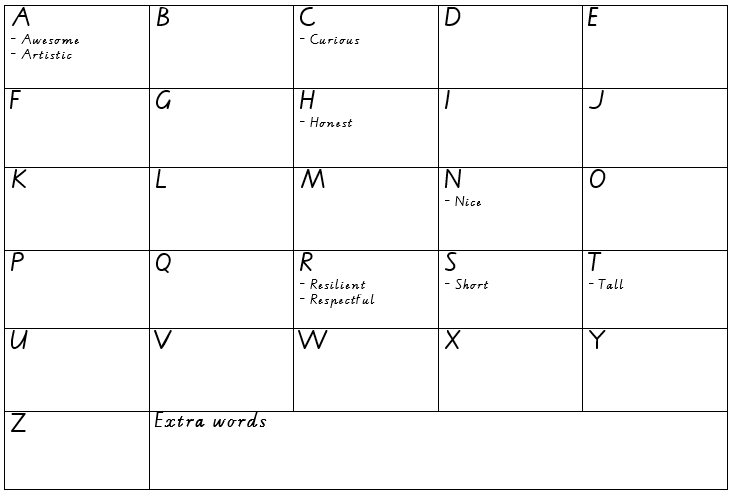
(10 minutes) - An adjective is a describing word. Sometimes we use adjectives to describe ourselves. For example: tall, awesome, lovely and enthusiastic.
Using books and your eyes, go on an adjective hunt.
Make a list of all the adjectives you find on the alphabet chart in your resource pack (example below).
Hint: a few have already been filled out for you.
(60 minutes)
- An acrostic poem is a short poem that does not need to rhyme.
An acrostic is a poem when the first letter of each line spells out a new word.
Each line usually starts with an adjective to describe the word written down the page.
We have included an example for you below.

It is now your turn to create an acrostic poem for the word STUDENT.
Don’t forget to add a picture!
Hint: you may like to use some of the adjectives you recorded on your alphabet chart.
Success Criteria (what we are looking for to provide feedback):
I can start each word with the matching letter on each line
I can use interesting adjectives
I can use capital letters at the start of each line.
Please upload a picture of the above work on Sentral through the parent portal.
Bring your poem to share during Thursday's Webex Essential session.
(50 minutes)
This task needs to be completed in your pink lined book with the date written at the top of the page.
Spelling/Handwriting
Learning Intention:
We are learning to make new words by changing the first letter
Task:
- Change the first letter of the words sun and bin to make real new words.
For example in the word sun, if we change the s to b the word becomes bun.
sun/bun.
In the word bin, if we change the b to a t the word becomes tin.
bin/tin.
How many new words can you come up with?
Tip: You might want to look at your alphabet chart to help you remember all the letters in the alphabet
(20 minutes).
These tasks can be completed in your blue scrapbook with the date written at the top of the page.
Maths
Learning Intentions:
We are learning to create the largest number using a place value chart and number cards
We are learning to create the smallest number using a place value chart and number cards
We are learning what chance is by sorting events into ‘will happen’ and ‘won’t happen’
Tasks:
- Neatly cut out your 3 sets of number cards (found below), place them upside down in front of you and mix them all up (make sure you keep these cards safe as we will use them again!).
Get out your place value chart (in your resource pack).
Think back to our fluency game last term where you had to try and create the largest number possible in your place value chart.
Start by picking up one of the number cards and decide whether to place it in the tens or ones column.
Pick up another number card and place it in the empty column.
Read the number you have created out loud. Record the number you made in your blue scrapbook.
Did you make the largest number possible? If not, what was the largest number you could have made?
Record this in your book.
Tip: the place value chart is double sided, with a hundreds on the back for an extra challenge if you are ready for it.
(50 minutes)
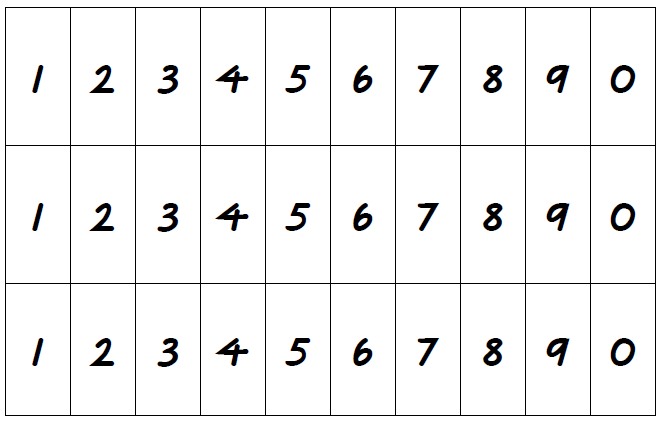
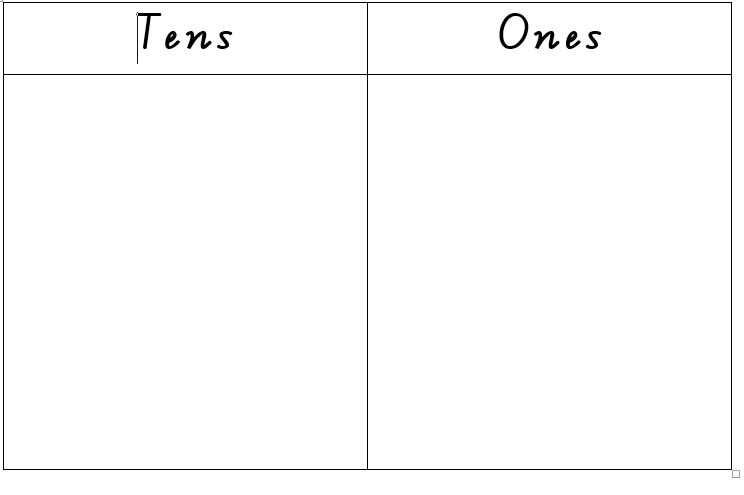
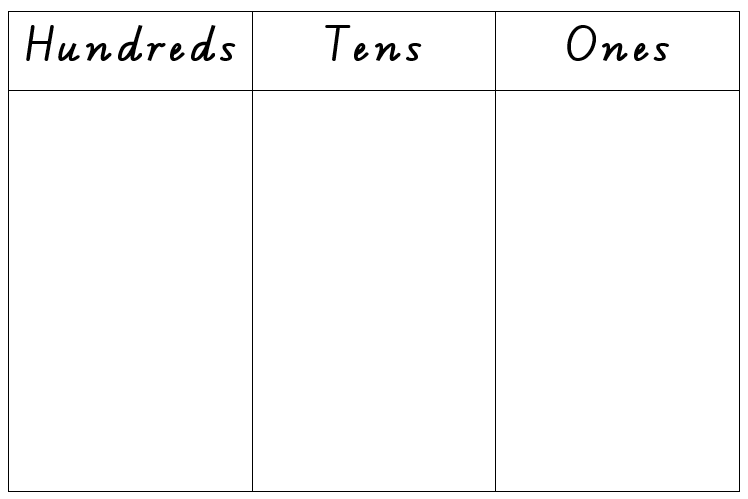
- For this task you will need to use the number cards you cut up and your place value chart.
Instead of trying to create the largest number possible, you will be trying to create the smallest number possible.
Make sure you read the number out loud and record it in your blue scrapbook.
Was it the smallest number possible? If not, what was the smallest number you could have made using the same digits?
(30 minutes) - Chance describes how likely it is for something to happen or not happen. Some events are certain, so they will definitely happen. Some events are impossible, so they definitely won’t happen. See example below.
Will Happen Won’t Happen -Everyone will have a birthday in 2020
-You will have dinner this week
-The sky will turn green
-Pigs will fly
Draw the above table in your blue scrapbook and sort the events below into ‘will happen’ and ‘won’t happen’.
1. Giraffes will grow wings
2. There will be 7 days in each week
3. There will be 12 months in this year
4. Trees will start walking and talking
5. You will go to sleep tonight
6. There are 4 seasons in a year
7. Fish will fall from the sky
8. Your parents will give you ice-cream for breakfast
9. Tuesday will be the day after Sunday
10. May will be the month after April
(50 minutes)
- Draw another will happen and won’t happen table in your blue scrapbook.
Come up with 5 of your own events to list under each heading
(40 minutes).
These tasks need to be completed in your scrapbook (blue book) with the date written at the top of the page.
Inquiry/Science
Learning Intentions:
We are learning to think about where food comes from by creating a KWL chart (know, wonder and learn)
Task:
- In your work book, draw up a KWL chart like the one below.
List as many things in each column as you can think of.
Tip: You may want to look in your fridge or pantry for ideas.
The first few have been done for you.
K
What I know about food
W
What I wonder about food
L
What I want to learn about food
Apples come from trees How do apples become apple pie? How do apples get to the supermarket?
After completing this activity click here to read ‘Where Does Food Come From?’. With a different coloured pencil, add any new ideas to your table.
Learning Intentions:
We are learning to explore why some things change.
Task:
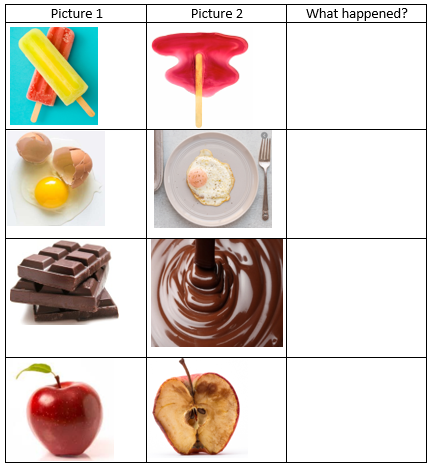
- Have a look at the pictures in the table below and label what you think these pictures are.
In the last column, explain what you think happened between the first picture and the second picture.
Can it be changed back? Add three of your own to the table.
Wellbeing
Resilience, Rights and Respectful Relationships - 'Stress Management'
Learning Intentions:
We are learning to identify ways of calming our bodies and minds
We are learning to list ways to cheer ourselves up
Task:
- Sometimes we feel emotions that do not make us feel good on the inside.
Some of these emotions might be angry, sad, frustrated or lonely.
When we start to feel these emotions, there are lots of things that we can do to calm ourselves down or cheer ourselves up.
Listen to ‘Don’t Think About Purple Elephants’ read by Chanelle Sheehan on StoryBox Library.
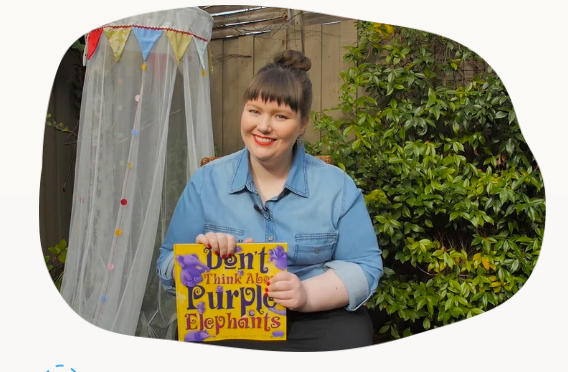
In the book, Sophie thinks of silly things to help calm her down and cheer her up.
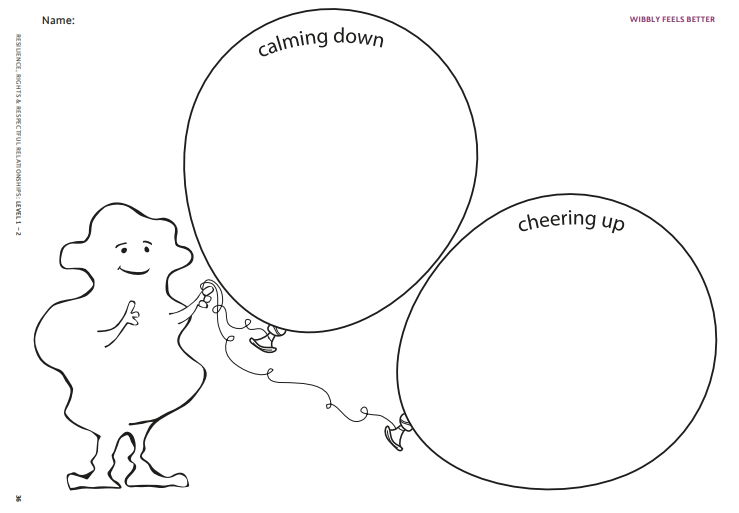
Using the ‘Wibbly Feels Better’ sheet in your LFH resource pack, write and draw in the balloons ways that you can calm yourself down and cheer yourself up.
When completed, glue this into your blue scrapbook.
Self-reflection:
In your book complete the following sentence:
I have shown respect at home this week by __________________________.
I have shown curiosity at home this week by __________________________.
I have shown integrity at home this week by __________________________.
I have shown resilience at home this week by __________________________.
P.E./Movement breaks
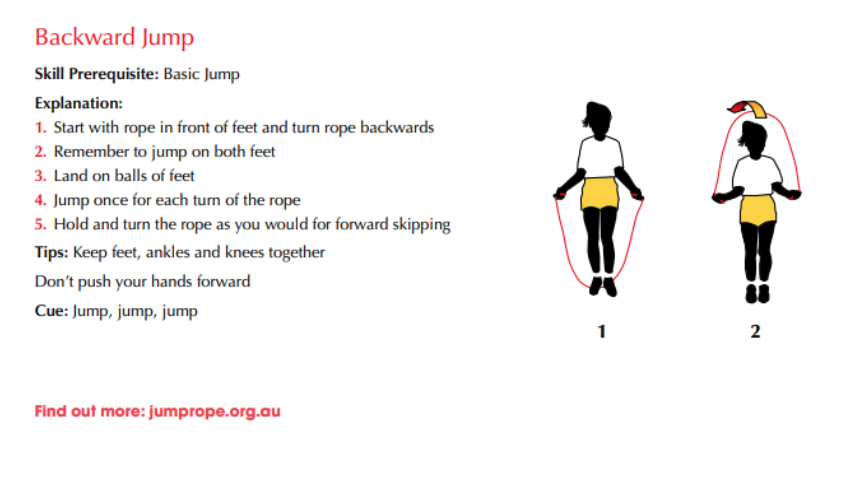
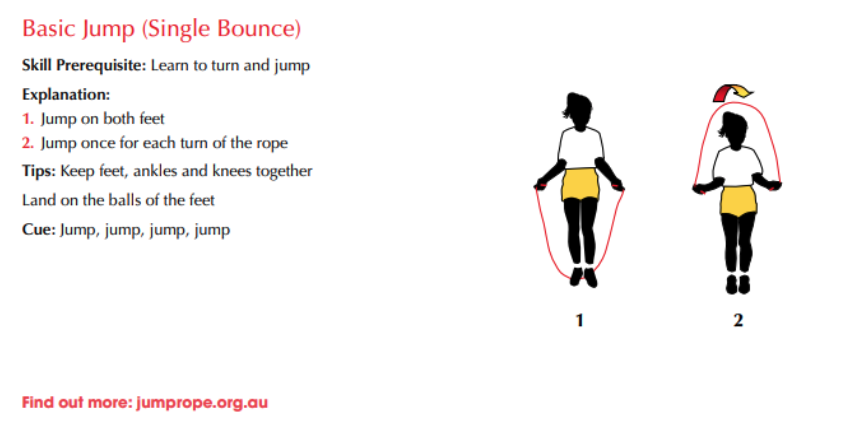
Our focus this week is to develop our skipping skills. Turn on your favourite music and make sure you find a safe space to practise.
Practise forward and backward skipping.
How many skips can you do in a row?
Can you beat it?
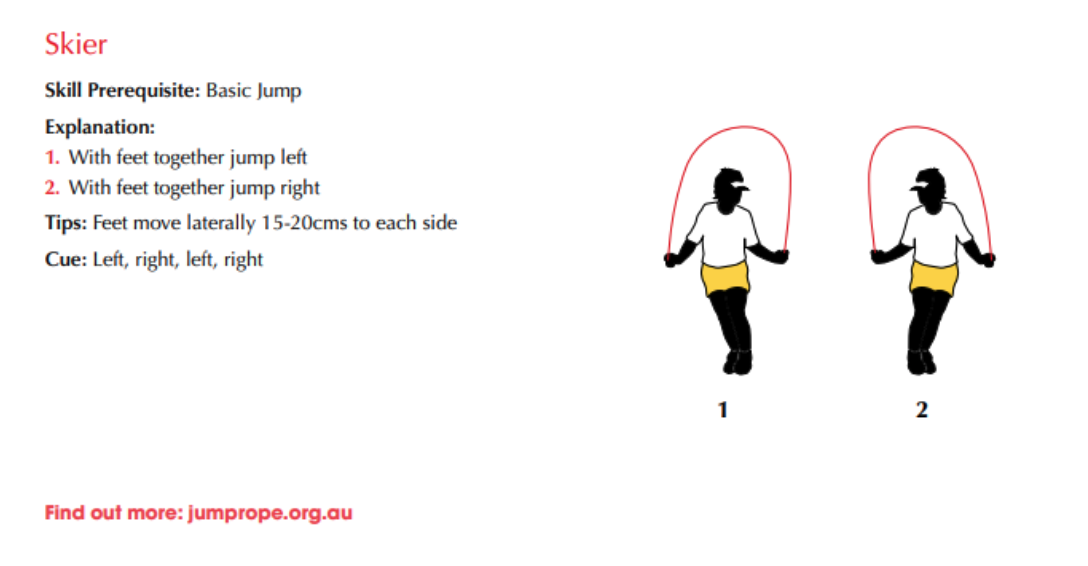
If you would like a challenge try the ‘Skier’! Good luck!
Click here for the other Specialist options
© Copyright Laburnum Primary School