
Year 5 Learning from Home Week 8
Week beginning - Monday 1 June
Welcome to Week 8!
This week we will start going into more depth with our inquiry and Science topics. You will have the opportunity to start researching a planet in our solar system!
Maths will be filled with hands-on activities to support our learning.
Please remember that there will be no Webex meetings on Wednesday this week as all the teachers will be doing their own learning.
Our Focus for this week is Learn.
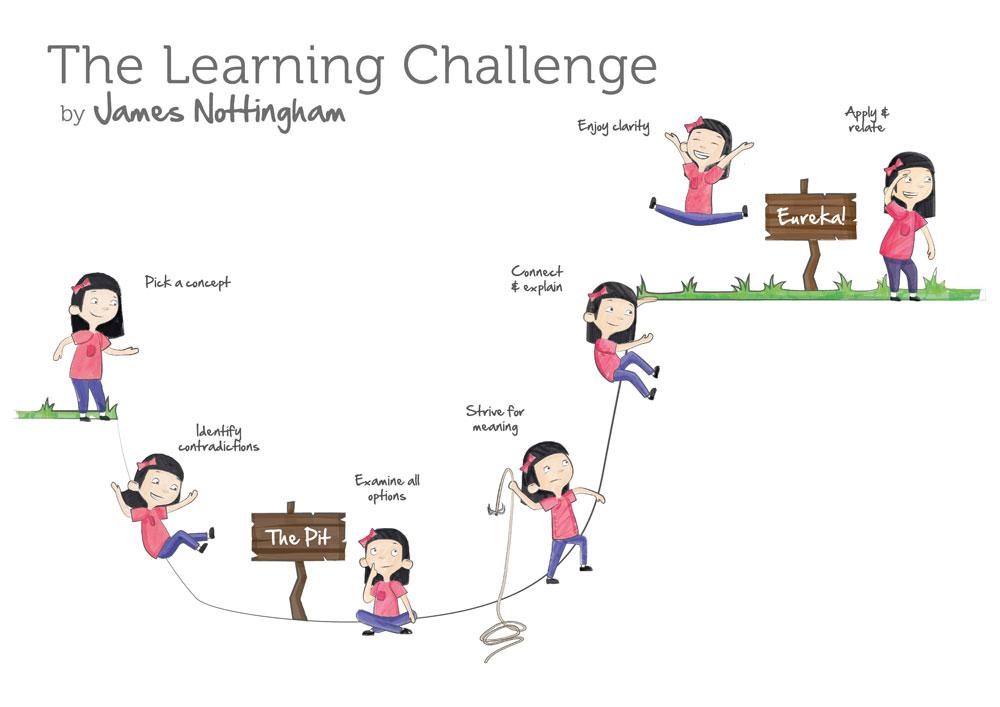
What was your experience of Learning from Home?
Consider yourself as an independent learner.
What helped you with your learning at home?
Did you have music playing?
Did you need to be alone in your own space, or did you like to have other people around?
Look at the questions in the Self- Reflection task at the end of the planner.
Keep these questions in mind as you complete your final week of Learning From Home.
Virtual Class Celebration! Bring a snack and drink to our final Webex session on Friday. Let’s celebrate our return to school!

Reading
Learning Intentions:
We are learning to identify the Author’s Purpose (PIE: persuade, inform, entertain).
We are learning to identify the differences between persuade, inform and entertain.
We are learning to research information about floods.
Tasks:
- Each Week: (60 minutes total over the week)
Read your Just Right Book and record your reading in your Student Diary every day - title, page numbers, genre and time spent reading. Build your stamina each day. - Shared Class Novel: (30 minutes)
Listen to our class novel on Epic! - ‘The Invention of Hugo Cabret’ by Brian Selznick. Listen for 30 minutes.
How close can you get to finishing the book? - Read to Research: (40 minutes)
We like to read for enjoyment, but it is important to be able to read for a purpose as well.
As we are working towards our Natural Disaster inquiry project, you are reading texts to gain an understanding of disasters.
You will need to use your reading skills, such as rereading, taking notes, and even asking clarifying questions to make sure you understand what you have read.
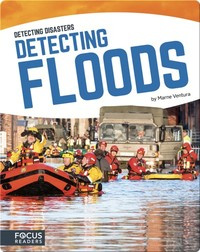
Read “Detecting Floods” on Epic! Answer the following questions, which may help you with your Natural Disaster project:
- What causes floods?
- What effects do floods have on people, towns and the environment?
- What are some parts of the world that are prone to flooding?
- What are the dangers of flooding, besides the water?
- How do people prepare for floods?
- What causes floods?
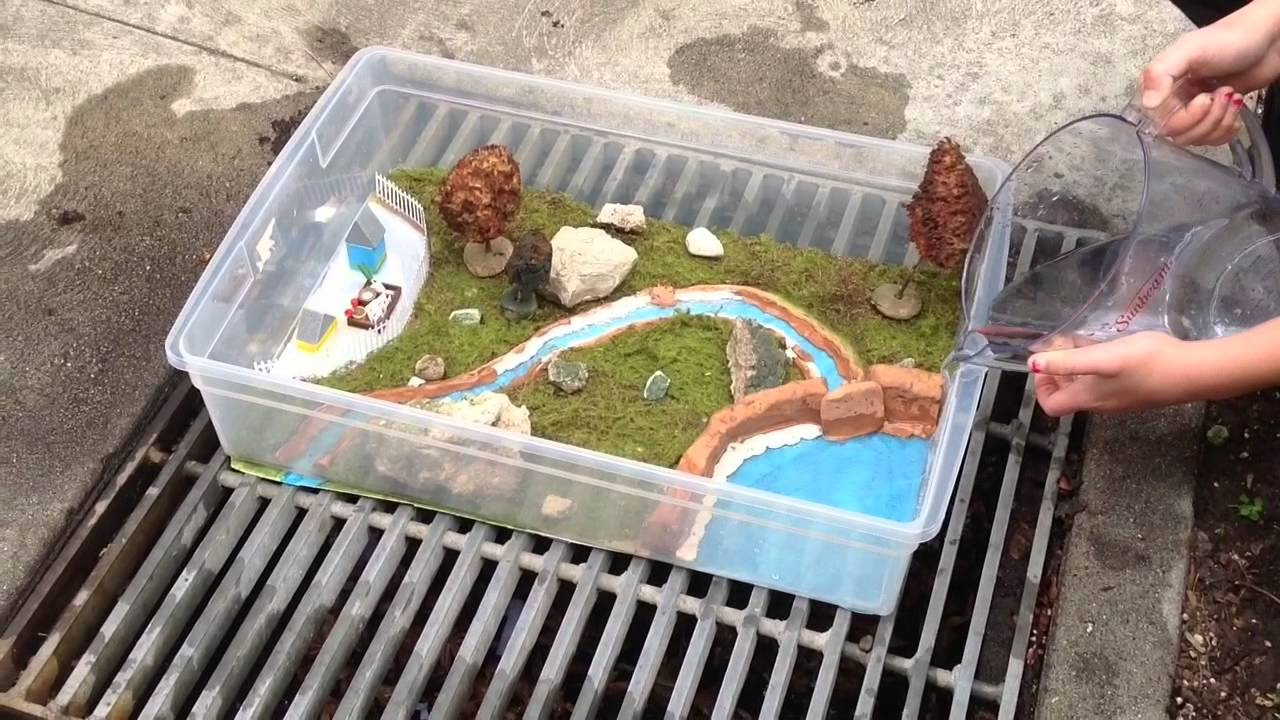
Challenge: Can you simulate a flood using items from home?
You could make a town from cardboard and soil from your garden.
Maybe you could build a town from LEGO or other toys?
Don’t use anything that will be damaged by getting wet.
What effects did you notice that your mini-flood had on the soil, houses or figurines in your experiment?
- Author’s Purpose - Categorisation: (40 minutes)
Why do people write?
It takes a lot of effort to plan, write, edit and publish a piece of writing, so an author must have a good reason to do all that!
Below are the three main reasons that a person will write, which makes the acronym P.I.E.:
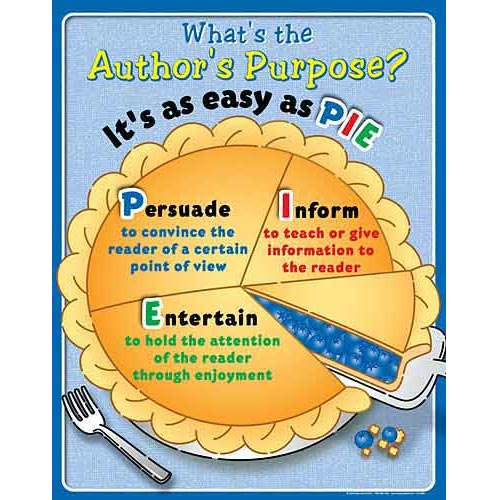
Persuade - To convince the reader of a certain point of view
Inform - To teach or give information to the reader
Entertain - To hold the attention of the reader through enjoyment
Browse Epic!, your own library and maybe even a newspaper to find three texts that would fit in each category.
Think about your Just Right book you are reading.
What is the purpose of that book?
For example:

- Author’s Purpose - Classification Chart: (40 minutes)
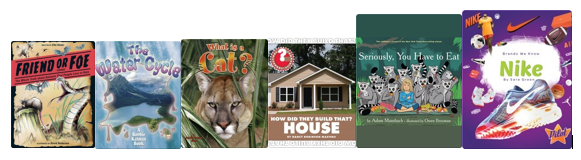
Read the following texts on Epic! and for each determine whether the author’s purpose is to persuade, inform or entertain.
What textual features told you this?
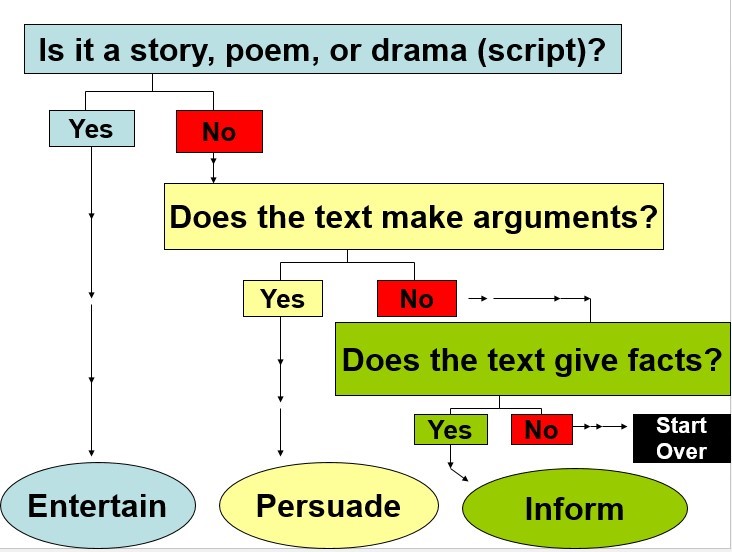
Create a classification chart, similar to the example below with questions you could ask to determine each book’s purpose.
Make sure to use different questions from the example.
Challenge: Can you find any texts that have two purposes at once? List the titles and authors. - Same Topic with a Different Author’s Purpose: (40 minutes)
You are going to experiment with writing for different purposes.
As you have seen in reading this week, we can classify the reasons why people write - to persuade, inform and entertain.
Here is an example of how you could write about the same topic (the Moon) for the three different purposes.
Persuade:
I strongly believe that humans should make colonies on the moon. As the Earth becomes too crowded and polluted, we are going to need to learn how to survive on other planets. The moon would be a great place to practise settling on other planets, so we should begin living on the moon as soon as possible.
Inform:
Although the Moon shines bright in the night sky, it doesn’t produce its own light. We see the Moon because it reflects light from the Sun. Ever noticed how the Moon appears to change shape each night? That’s because as the Moon orbits the Earth, the Sun lights up different parts of its surface – so it’s just our view of the Moon that’s changing, not the Moon itself.
Entertain:
Thy beauty haunts me heart and soul,
Oh, thou fair Moon, so close and bright;
Thy beauty makes me like the child
That cries aloud to own thy light...
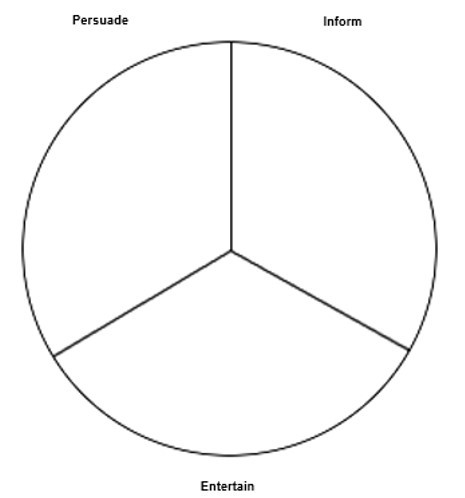
Below you can see an Author’s Purpose PIE, which you can print out or copy into your workbook.
Your task is to fill in each segment by writing for the matching purpose.
You could write about the same topic in three different ways, as in the example, or choose a different topic for each purpose.
Writing
Learning Intentions:
We are learning to use causal connectives when writing information reports.
We are learning to organise information into paragraphs.
We are learning to use correct structure when writing a letter.
We are learning to use a visual stimulus to inspire our writing.
Tasks:
- Thank You Letter to Your Parents: (40 minutes)
It has been an interesting two months learning from home, but it is almost time to return to the classroom.
Before we do, it is important that we take a moment to consider the help and support our parents have given us.
Your task is to write a letter to thank your parents (or grandparent, older sibling, or whoever you feel supported you a great deal).
Your letter should include:
- Your feelings about what it has been like to learn from home.
- Times when you felt challenged.
- Times when you felt supported by your chosen person.
- What you will miss about being at home with this supportive person.
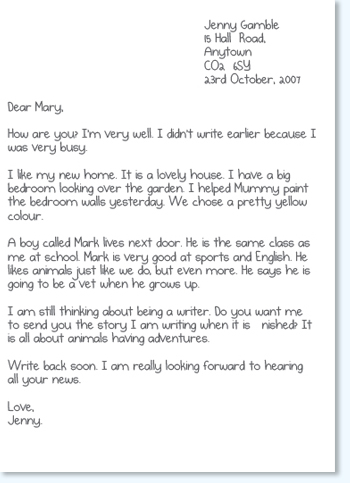
Use the example below to help remind you of letter writing structure.
Challenge: Is there something else you could do to show your appreciation?
Make an origami flower, make a drawing, clean the house or do the dishes?
What else could you do to say Thank You?
- Causal Connectives: (40 minutes)
A connective (or conjunction) is a word or phrase that connects ideas in our writing.
It was raining, so I opened my umbrella.
In this sentence, ‘so’ is connecting the idea that it was raining, with the idea that I would open an umbrella.
Causal connectives make an even stronger connection - that one thing happened because the other happened first.
I went to the dentist because my tooth was hurting. One thing led to the other.
Causal Connectives can be used in the middle of a sentence, like in the above examples.
They can also be used at the beginning of a sentence to refer to the sentence before.
For example, “I didn’t have my umbrella with me. Consequently, I got soaking wet in the rain.”
In information reports, much of our writing will use causal connectives, as we are explaining why things happen or are the way they are.
Task: Choose 5 of the Causal Connectives from this list and make your own sentences with them:
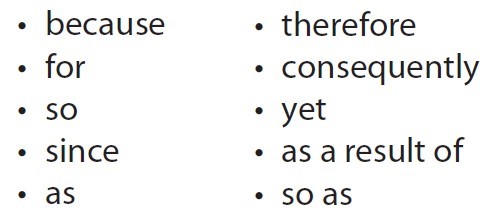
Challenge: Go back and look at your writing that you have done already this term.
Highlight causal connectives that you have already used and then try to add other causal connectives to connect your ideas. - Information reports: (40 minutes) Do this lesson after completing the reading task - Read to Research.
When writing information reports, we arrange the information into paragraphs so that it is easy to read and understand.
Each new topic will be a new paragraph. Each paragraph will have three main parts:
- The introduction (the first sentence) introduces the topic in a general manner.
- The supporting sentences (the sentences in the middle) are where the main information is located. They contain specific facts.
- The conclusion (the final sentence) summarises the idea or the topic of the paragraph in a few words.
Look at this example from an Information Report about the Milky Way. This one paragraph discusses how it is just one of many other galaxies.
There are many galaxies besides ours. (Introduces topic) There are so many, we can’t even count them all yet! The Hubble Space Telescope looked at a small patch of space for 12 days and found 10,000 galaxies, of all sizes, shapes, and colours. (Supporting information) Some scientists think there could be as many as one hundred billion galaxies in the universe. (Summary sentence)
When you read “Detecting Floods” earlier in the week, you recorded information.
You will now use that information to write the main body text of an Information Report.
Try to write at least three paragraphs containing facts about floods.
Challenge: Refer back to last week’s lesson about Information Report introductions, and write an introduction for the paragraphs you wrote today.
- Personal Choice Writing: (40-60 minutes)
Put on your ‘Curiosity Cap’ and choose one of Jacek Yerka’s paintings below.
Create an interesting piece of writing, such as a narrative, procedure, or poem to bring back and share with the class.
Remember to use adjectives and adverbs to add detail, then revise, edit and use your best handwriting.
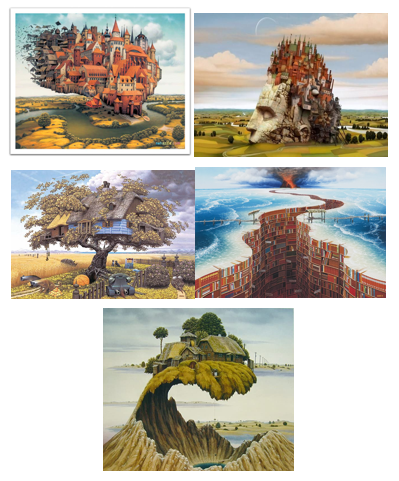
Challenge: Draw/paint your own surrealistic piece of artwork and write your own story to match.
(Jacek Yerka is a Polish surrealist painter from Torun, Poland).
Spelling
Learning Intention:
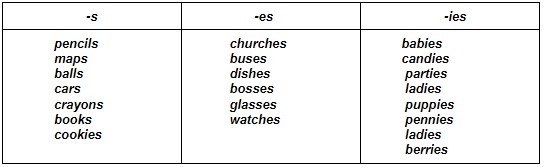
We are learning to add suffixes to singular nouns to make plural nouns.
- Plural Nouns: (20 minutes)
Singular nouns are words that describe just one person, place, thing or idea.
Plural nouns tell us that there are more than one.
A lot of the time, this is signalled by the addition of the suffixes ‘s’, ‘es’ or ‘ies’.
For example, tree becomes trees, and teddy becomes teddies.
Sometimes the base word changes, but this is less common.
For example, mouse becomes mice.
On rare occasions, the word stays the same.
For example, sheep is both the singular and the plural noun.
This week we will focus on the words that end in the suffixes ‘s’, ‘es’ or ‘ies’.
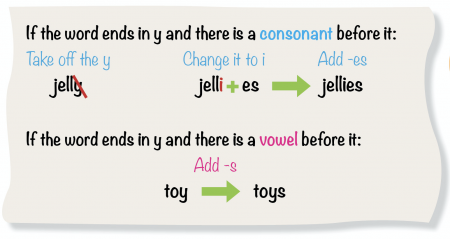
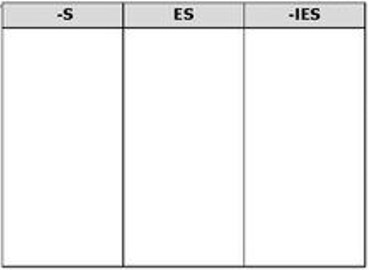
Copy the table in the example above into your workbook.
Add the correct suffix to each of the following singular nouns to make them plural, then write each in the matching column:
baby, church, bus, pencil, map, dish, candy, ball, party, boss, car, crayon, book, lady, glass, puppy, penny, cookie, watch, berry.
Challenge: In your reading book/s, search for singular nouns and turn them into plural nouns and search for plural nouns and turn them into singular nouns. Record ten or more in your notebook.
Maths
Learning Intentions:
We are identifying symmetrical shapes and patterns using a mirror.
We are learning to transform shapes using reflections.
We are learning to create shape patterns using food items.
We are exploring different aspects of volume.
Tasks:
- Any unfinished Essential Assessment tasks MUST be finished this week (Time, Shape or Location and Transformation).
- Reflection and Symmetry: (40 minutes)
Task 1:
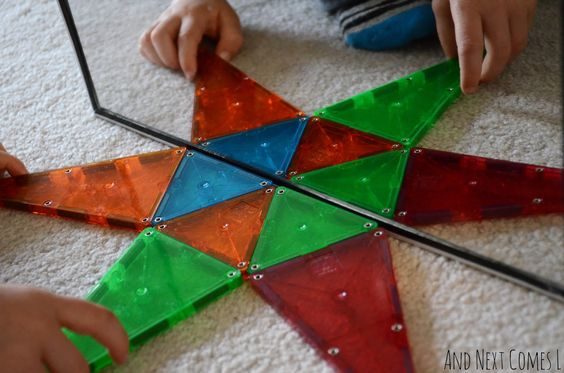
Use a mirror to create at least five symmetrical pictures or shapes.
Place a shape or object up against the mirror and draw what you see in your workbook.
What different shapes and patterns can you make?
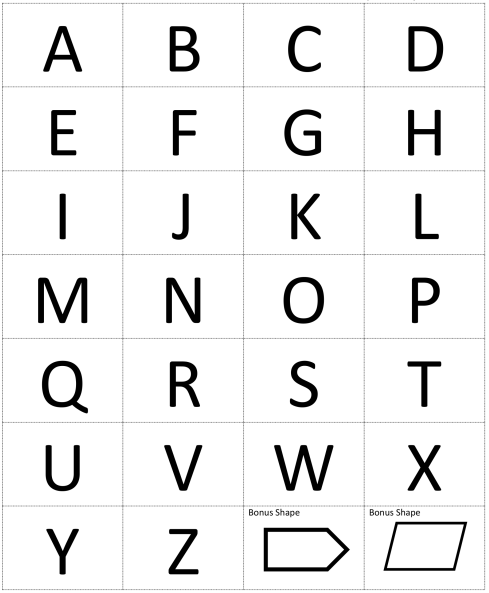
Task 2: Look at the capital letters below.
Can you figure out which letters in the alphabet are symmetrical (vertically, horizontally, or both)?
Write the letters in your workbook and draw any lines of symmetry that you find in each letter.
Now try this same activity with the lowercase letters.
Which set of letters has more lines of symmetry in total?
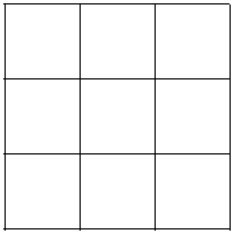
Challenge: Systematically explore the range of symmetric designs that can be created by shading whole squares of the grid below.
(Hint: The line of symmetry could go through the grid at any angle!).
How many can you find?
- Shape Transformation - Reflection: (40 minutes)
Have you ever been inside a shop and looked out the window?
Or have you ever looked at writing in the mirror?
You might have seen something like this-
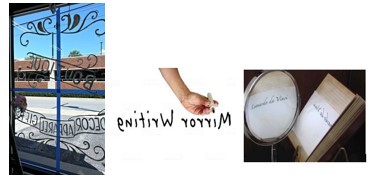
Notice how the letters are backwards?
They are flipped or reflected.
This is a type of transformation that can be applied to shapes and letters.
Transformations change the way the shape is positioned.
Task 1:
Write your name backwards.
If you find it too difficult, try looking in the mirror while writing.
Now try writing a whole secret mirror message to a friend or family member that can only be read by holding it up in the mirror.
Task 2:
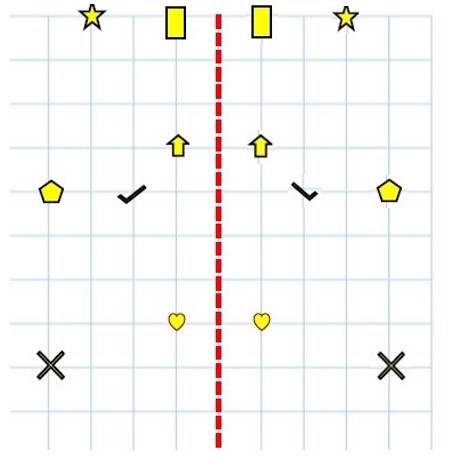
We can also talk about reflecting shapes as ‘flipping’.
What was on the right side of the shape will now be on the left, and vice versa, as in this example.
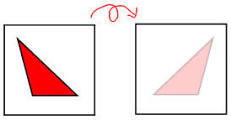
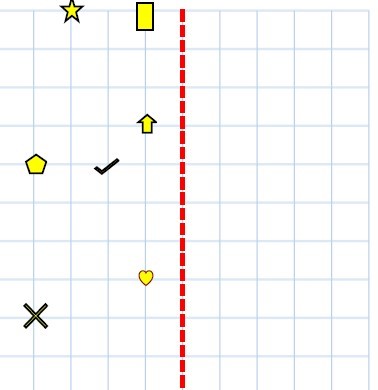
Print out or copy the image below. If the red line is a mirror, where would each shape appear on the other side?
(Hint: one of these objects is not symmetrical, so will need to be flipped!)
To check if you are correct, you can hold the page up to an actual mirror!
Challenge: This ABC Education web page has a great tool for experimenting with shape transformations! - Shape Patterns: (40 minutes)
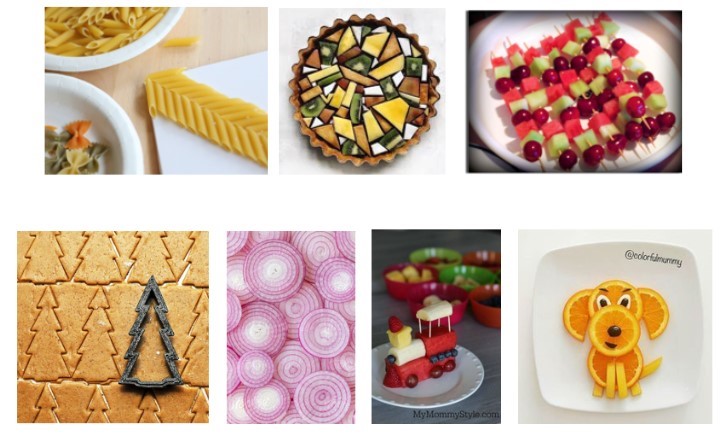
Let’s make shape patterns with food!
Do you have two different types of bread that you could tessellate? What about slices of fruit?
You might make a repeating pattern, such as a fruit skewer.
Take a picture of your tessellation to share with your class.
- Problem Solving: (40 minutes)
Imagine a natural disaster was going to hit tomorrow and everyone’s plumbing was going to stop working.
Think about if you had to store some emergency water for the future. How much could you store?
You will need to use litres and millilitres (and possibly kilolitres) to measure the amount.
You won’t actually fill the containers - your parents wouldn’t be happy with the water bill!
- How much can your sink or bathtub hold?
Make an estimate in litres.
Describe how you could figure it out (remember: don’t actually fill the sink or bathtub).
How long do you think that water would last? - How much water could you store in the containers in your house?
How many drink bottles, cups, containers do you have?
How many litres of water could you store in an emergency?
Challenge:
Once you have figured out how much water you could save, can you figure out how long your family could survive with that amount of water?
How much water does a person need each day?
What else do you need to use the water for in your home?
Inquiry
Learning Intention:
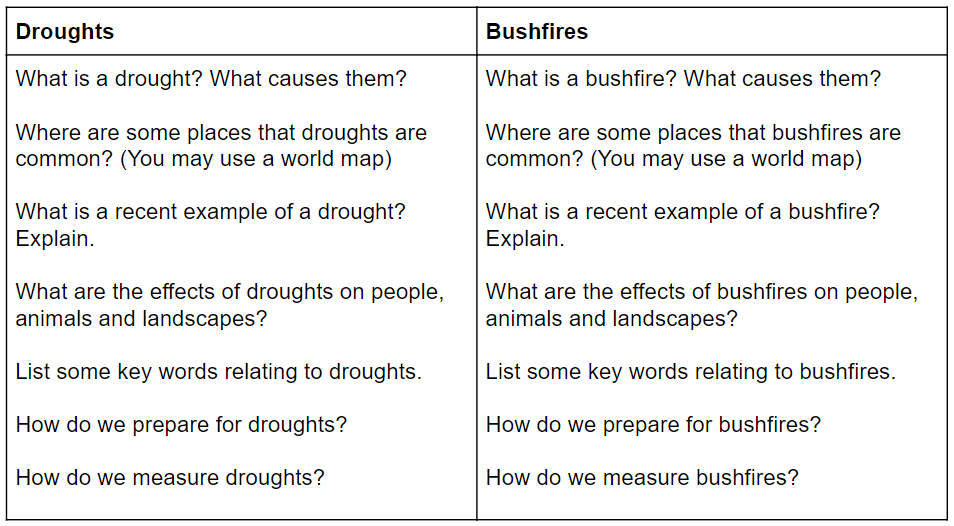
We are learning facts about droughts and bushfires.
- Natural Disaster Investigation - Record your Research: (60 minutes)
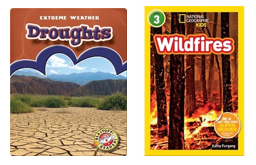
Use the Laburnum Senior School Inquiry: Natural Disasters website to access key information and answer the questions below about droughts and bushfires.
You can also read the texts pictured below or search for additional books on Epic!
Science
Learning Intention:
We are learning facts about a chosen planet in our Solar System.
- Planet Research: (40 minutes)
At the end of the term, you will produce a model or experiment to demonstrate your knowledge of a planet in our Solar System.
Choose one of the 8 planets in our Solar System to research.
Use Epic! and the NASA Website to discover the following information and record it in an organised way (e.g. a table):
- How the planet was named
- Planet order/position in the solar system
- Average temperature/weather
- Type of rotation (length of day, angle, direction)
- Time to orbit the sun (year)
- Size of the planet
- Colour of the planet
- Inner or outer planet/gas or rock
- Atmosphere of planet (if applicable)
- Moons (how many, names)
- Clouds (if applicable)
- Three interesting facts
- How the planet was named
Challenge: Create a ninth planet. Include the following information: size, spin, tilt, rings, moon, surface, atmosphere, bacteria, plants, animals, alien life, position in the solar system, path and name of your planet.
Draw a diagram of your planet to demonstrate what it looks like.
Wellbeing:
Learning Intention:
We are learning to describe commonly occurring problems.
We are learning to offer suggestions about how to solve commonly occurring problems.
Task:
- During a Webex session this week, your teacher will share a social story about a problem.
Using the chat function, you will offer suggestions about how to solve the problem, using your understanding of problem-solving strategies, peer relationships and positive outcomes.
We will chat about your ideas and how well they might work! - Mindfulness Challenge:
Try some of these mindfulness activities this week: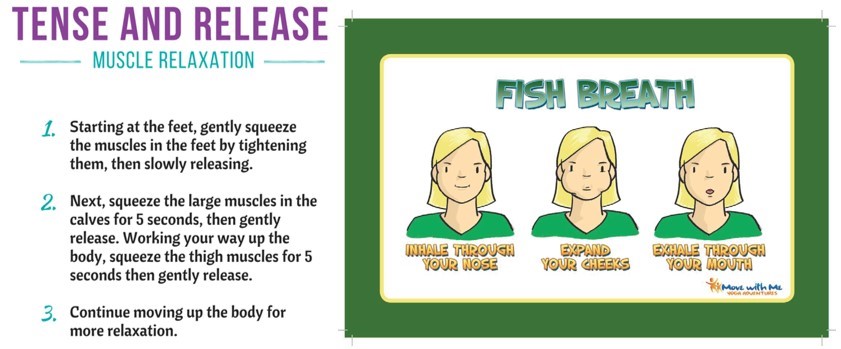
Self-Reflection:
- Answer the following questions (in full sentences where applicable) to bring back to your teacher at the start of next week:
- On a scale of 1 to 10, how do you feel that learning from home has been? (1 being "not so great", 10 being "it's the best!")
- Why did you choose the number above?
- What have you learnt about yourself?
- What are 3 things that you realise you're grateful for? (Use one word for each answer)
- Do you agree or disagree with the following statements?:
- I enjoy learning from home at my own pace
- I'm finding it easy to organise myself at home
- I realise that I've demonstrated resilience and perseverance
- I have learnt something new about myself
- I am submitting most of the work that is set
- What has been your favourite part of learning from home?
- What have you found most challenging when learning from home?
- On a scale of 1 to 10, how do you feel that learning from home has been? (1 being "not so great", 10 being "it's the best!")
Specialist Classes:
Click here for the Specialist options
Answers for Week 8
Spelling
Maths
Reflection and Symmetry
Vertical - A H I M O T U V W X Y
Horizontal- B C D E H I K O X
No line of Symmetry- F G J L N P Q R S Z
Shape Transformation - Reflection
© Copyright Laburnum Primary School