
Year 6 Learning from Home Week 5
Week beginning – 11 May 2020
This week we will be focussing on MOTIVATION.
Motivation is what drives us to make things happen – staying motivated over time requires positive thinking and self-talk, and organisation.
HOME LEARNING REMINDERS:
Ensure you include a TITLE and DATE before beginning any new tasks, not using a new page for each new task.
Your setting out and handwriting need to be NEAT and CLEAR.
Use the times provided as a guide for how long to spend on each task.
At the beginning of the week, read through all of the tasks, then use your Organisational Timetable as a guide to self-manage these, including necessary breaks.
Remember to complete your self-reflection at the end of the week.
These tasks need to be completed this week:
You need to include 30 minutes a day in your Organisational Timetable for MOVEMENT breaks.
See ‘Specialists’ link towards the end to access ideas from P.E.
You need to include 30 minutes a day in your Organisational Timetable for WELLBEING/MINDFULNESS breaks.
You may choose to listen to some relaxing music, meditate or try some origami:
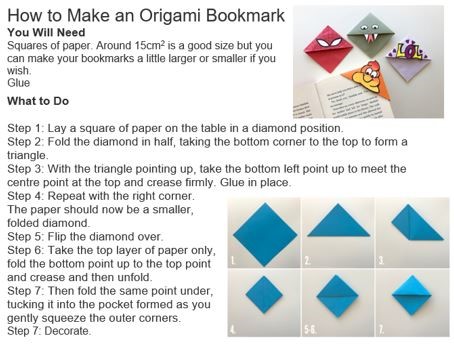
You might also like to watch Behind the News
Reading
Learning Intentions:
To explore how reading fluency improves reading skills
To monitor fluency, with a focus on stress and intonation
Tasks:
Task 1: Daily Independent Reading with Tracks of your Thinking (30 minutes a day, plus tracks of your thinking)
Continue with your own independent reading.
This could include texts selected from Epic, books, magazines or newspapers you have at home, or other online library sources.
Remember to detail what you are reading in your Reading Log and leave tracks of your thinking. For example, questions, wonderings, predictions, inferences, connections or visualisations.
You might like to read some articles from KidsNews
Task 2: Developing Reading Fluency Part 2 - This follows on from last week (30 minutes)
In fluency, you developed your pausing and phrasing last week, so we are now moving on to two different strategies:
Stress: placing emphasis on particular words in a sentence to reflect meaning and structure
Intonation: varying the tone of your voice to show the meaning of the text – made up of rising, falling, pitch and volume
Consider your own reading.
How would you rate your reading fluency in these two areas?
Rate yourself out of five and give reasons.
Read aloud to someone in your home and ask for feedback about these two areas of fluency.
Does the feedback match your own assessment of your reading?
Rule up a table like the one below to record your comments and a comment from a reading buddy (e.g. Mum).
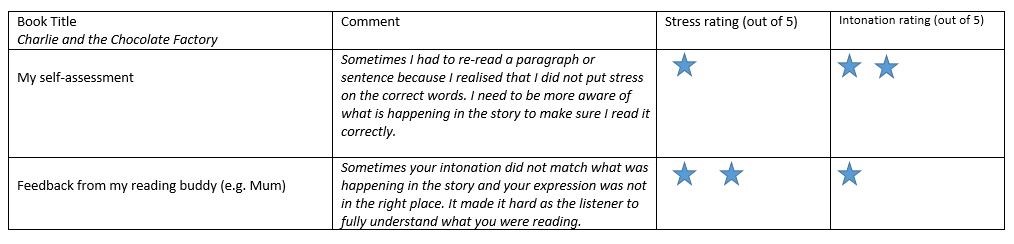
These are areas of fluency for you to work on this week. Use the feedback and your own self-assessment to make improvements in these areas.
Even if you think you are really good at these areas of fluency, you can still practise!
Perhaps try a more challenging text.
Task 3: Exploring Stress in Fluency to Show Meaning (30 minutes)
Stress changes the meaning of words and sentences.
Read the speech bubbles below emphasising the words which are in bold.
Did you notice how the meaning changes?
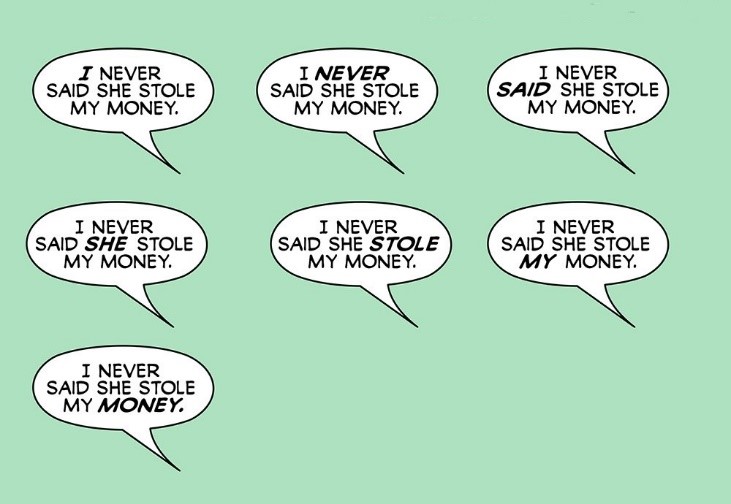
Try reading the six sentences below several times, add stress to different words each time to change the meaning:
I don’t think she will listen to him.
She isn’t flying to Hawaii tomorrow.
Chloe will cycle to the restaurant tonight.
Don’t eat Grandma.
Mrs Sime didn’t eat your biscuits.
I said she might consider a new haircut.
Choose one of the sentences above or find one of your own to illustrate, showing the different meanings of the sentence when different words are stressed.
Task 4: Exploring Intonation (30 minutes)
Pitch is the way your voice rises and falls when speaking. For example, whenever the pitch is high, it is either insisting something or asking a question.
When the pitch is going down to low, it may be saying a statement or a normal command to another person.
Tone is the strength or the power used. For example, a timid question or a forceful command.
Spend 5 minutes listening to a book reading on Audible or Storybox Library
(Story Box Log In: lpsstories, password: lps1).
Click on the pictures below to access each story.




What do you notice about the intonation? How does this help you visualise the story?
Get creative with reading aloud. Try different voices, experiment with a different accent, change your volume or pace, or project a particular emotion in your voice.
Here are some suggestions:
a sad person, a fast/slow talker, a whisperer, a cowboy, a princess, a monster, a robot, a crazy voice
Try recording yourself and then listen. Save your recording if you can, as we may be able to share.
How does the intonation change the mood/feeling?
Task 5: Audiobooks (30 minutes)
Trying new activities is a way to stay motivated. Last week you explored Audible.
This week select an audio book that interests you and a book from a genre that you don’t usually read/listen to. Listen to both for at least 10 minutes and then compare your listening experiences in any way you choose.
Feel free to keep listening in your own time.
Follow the link to Audible by clicking here. You do not need an account or email to access via our link.
Or listen to an audio book from your local library.
You can use your Whitehorse Library membership (or adults can join online here) to listen to a range of digital books.
It is a free service.
Click here to go to Whitehorse Manningham Library
Writing
Learning Intentions:
To create a draft Information Report using the appropriate structure and features
To use a checklist to identify and edit a writing draft
Tasks:
Task 1: Creating Your Information Report Draft (50 minutes)
Use your plan from last week to create a draft information report.
This should be approximately a page long and written in your home learning book.
What’s important?
Getting your ideas down into cohesive sentences
Paying attention to the correct structure of an information report
Using the appropriate text features
Paragraphs: The first sentence of each paragraph should begin with a topic sentence, expressing the main idea or topic of that paragraph.
The next sentence will provide more detail on the topic sentence or main idea.
The following sentence in the paragraph can provide an example or evidence regarding the main idea.
What’s not important yet?
Handwriting neatness
Spelling accuracy, but remember to underline words you are unsure of so that you can check them later
Presentation
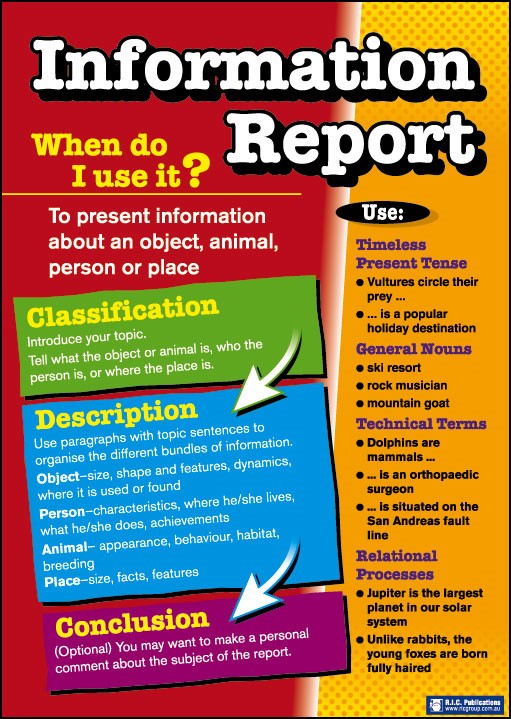
Task 2: Editing your Information Report (15 minutes)
Use the checklist provided below to edit your draft.
Remember to go back and make any changes required.
If possible, ask a parent or older sibling to proof read your edited draft and provide feedback that you might consider.

Spelling
Learning Intentions:
To identify how adding prefixes and suffixes to base words can change the meaning of the base word
To identify various ways the spelling of base words changes when adding a suffix
Definitions (revision):
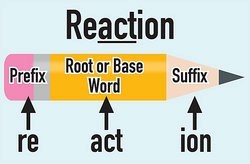
A prefix is a group of letters placed before a root or base word.
For example, the word ‘unhappy’ consists of the prefix ‘un-’ (which means ‘not’) combined with the base word ‘happy’.
The word ‘unhappy’ means ‘not happy’.
A base word or root word cannot be broken down.
It gives a word its basic meaning. For example, ‘act’ (see below).
A suffix is a letter or group of letters attached to the end of a base word to change it’s meaning or tense.
For example ‘-ed’, ‘-ful’, ‘-y’, ‘-ly’, ‘-ing’.
Tasks:
Task 1: Manipulating Prefixes and Suffixes (30 minutes)
Using the examples of prefixes, base words and suffixes below, record any 10 of each on scrap paper or card (30 in total).
You could colour code the different categories.
Alternatively, you are welcome to come up with your own, or a combination of both.
Cut out each word, so they are on their own.
Try to keep them in their appropriate categories and not mixed up i.e. prefixes together, base words together, suffixes together.
Now chose any base word.
See if you can move various prefixes to the front of your base word and various suffixes to the end of your base word to create new words.
You can use just a prefix or a suffix, as you may notice that some base words don’t use both. For example, I placed prefix ‘mis-‘ in front of base word ‘read’, then added the suffix ‘-ing’ to the end and made the new word ‘misreading’.
Use a dictionary to help you if you’re unsure if the word is a real word or not. It MUST be a real word.
Examples: Select any 10 of each category:
Base words: describe, place, imagine, educate, vent, sun, obey, prefer, explode, septic, pend, behave, possible, centre, copy, love, spell, fiction, prove, like, commit, terminate, healthy, code, relax, social, act, age, admit, serve, confuse, sense, pump, noise, happy, copy, divide, confuse, discuss
Prefixes: anti-, de-, im-, mis-, over-, non-, pre-, re-, un-, in-, dis-, ex-, epi-
Suffixes: -y, -ing, -ies, -able, -tion, -ation, -ed, -ment, -ion, -ary, -ily,
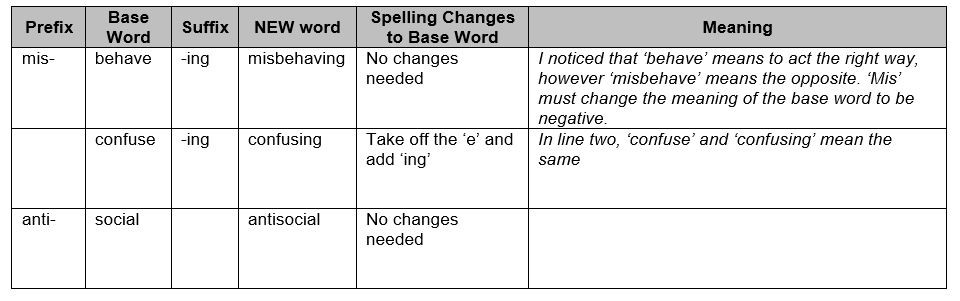
Rule a table with six columns and label each column with titles ‘Prefix’, ‘Base’, ‘Suffix’ ,‘New Word’, ‘Spelling Changes to Base Word’.
Leave the last column blank, to be used later in task 2.
Again, you may use a spelling tool such as a dictionary to check the accuracy of your words.

Work within the time allocated, aiming to complete at least 10 new words in your table.
Task 2: Meanings (30 minutes)
Have you noticed that when you add prefixes and suffixes to base words, the meanings can change?
Complete the final column in your table with the title ‘Meaning’.
For each row in your table, see if the ‘Base Word’ meaning is the same or different to the ‘NEW word’.
In the final column, record your observation. *You may use a dictionary to assist you if needed.
Maths
Learning Intention:
To build automatic response of the four processes
To develop concepts in Measurement and Geometry
Tasks:
Task 1: Sunset Maths or Cool Math for Kids (5 minutes each day)
Each day this week, work on developing your number fluency by completing 5 minutes of ‘Sunset Maths’.
Log into Essential Assessment and select the ‘game controller’ icon to access Sunset Maths.
If you would like to try a different fluency task, try one of the interactive fluency activities on Cool Math for Kids.
Task 2: My Numeracy (10 minutes each day)
Log into Essential Assessment.
Select Measurement and Geometry.
Select General All.
Select My Numeracy.
You should now see your Learning Goals.
Continue working on you goals in Measurement and Geometry.
Spend 10 minutes each day working on these skills in My Numeracy.
You can continue to work on any unfinished goals from Number and Algebra at any time.
If you have finished all of your My Numeracy goals to date, try solving the following worded problems.
- Oceanside Bike Rental Shop charges $15 plus $6 an hour for renting a bike. James paid $51 to rent a bike. How many hours did he pay to have the bike checked out?
- Liam bought 9 new basketball trading cards to add to his collection. The next day his dog ate half of his collection. There are now only 39 cards left. How many cards did Liam start with?
- The sum of three consecutive odd numbers is 183. What is the smallest of the three numbers?
- On Monday, 549 students went on an excursion to the zoo. All 9 buses were filled and 9 students travelled in cars. How many students were in each bus?
- Nicole bought a soft drink for $4 and 7 chocolate bars to share with her friends. She spent a total of $25. How much did each chocolate bar cost?
*You can check your answers to these problems at the end of this week’s ‘Learning from Home’ activities.
Learning Intention:
To complete a pre-assessment in ‘Number and Algebra’ with integrity
To further develop concepts in Number and Algebra
Task 3: Pre Assessment in Number and Algebra (30 minutes)
You will find an assessment allocated to you in Essential Assessment that you need to complete.
When you are completing an assessment, you must complete these under test conditions, which means:
No assistance from anyone, no distractions, use a pencil and paper to work out answers and finally, no calculators.
You will be expected to demonstrate our school value of ‘integrity’ when completing this task.
Task 4: Further Investigating Number and Algebra (Levelled Activities)
This week we have added in three levels that you are able to choose from.
Please read the topics that will be covered below and choose one that is just right for you.
They get progressively more complex.
You may like to choose just one topic or work your way through from 1-3.
It is up to you to choose the area most suited to you. See table below for the different focus of each level.

Level 1: Work through the following tasks to build your knowledge of factors and multiples.
Multiples are the answers you get when you multiply 2 numbers. For example, what are the multiples of 8?
8, 16, 24, 32, 38, 40, 48, 56, 64, 72, 80, 88, 96 … and so on.
1A: Finding Multiples (15 minutes)
Draw the multiples wheel below in your home learning book and fill them in.
The outside answers will be the multiples of the inside number. For example, 2 x 2 = 4. Therefore 4 is a multiple of 2.

Counting forwards by multiples.
Fill in the table below to count forwards by multiples

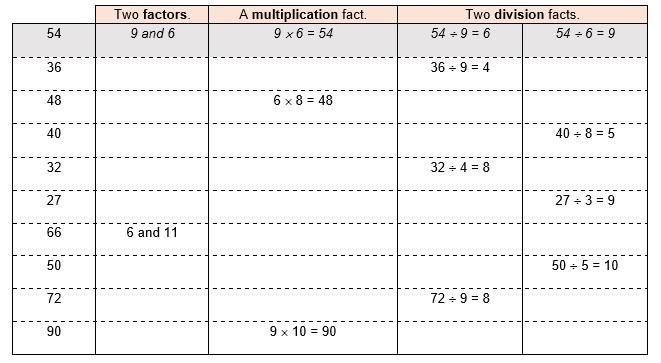
Factors are any two numbers that when multiplied together equal another number.
For example, 3 x 4 = 12. 3 is a factor of 12 and 4 is a factor of 12
To learn about factors and composite numbers, watch a video here.
1B: Finding factors (15 minutes)
Use your multiplication tables knowledge to complete the missing parts of the chart. The first example shows you how.
1C: Interactive Multiples and Factors (15 minutes)
To continue to work on multiples, click here for an interactive game.
To continue to work on factors, click here for an interactive game.
Level 2: Work through the following tasks to build your knowledge of prime and composite numbers
Prime numbers have only two factors, themselves and one.
There are a few prime numbers shown in the multiplication table below.
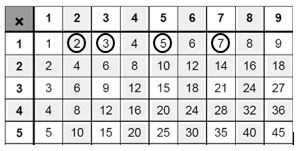
The first prime number is 2.
2 = 2 x 1 only.
There are no other factors – making it a prime number.
The same goes for 3 as 3 = 3 x 1 only.
The same goes for 5 and 7.
Composite numbers are numbers with several factors. For example, 6 = 6 , 1 or 3 , 2.
Looking at the multiplication table again, notice that some numbers are missing from the table.
For example, the number 29 doesn’t appear in the table because 29 is a prime number. 29 = 29, 1 only.
There are no other factors.
2A: Interactive Tutorial (15 minutes)
To investigate multiples, factors, prime and composite numbers through an interactive tutorial, click here.
2B: Prime Factors (15 minutes)
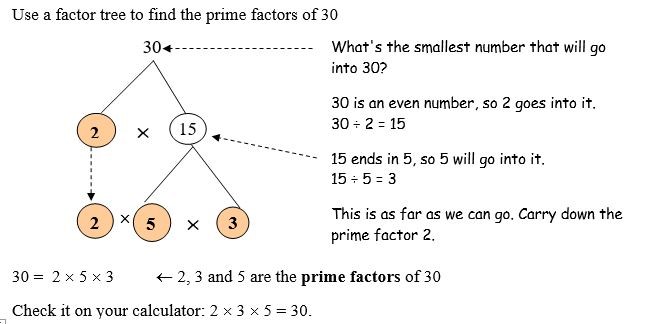
Using the guide below, find the prime factors of the following numbers. 10, 28, 42, 54, 70, 90, 104, 130
2C: Finding Prime and Composite Numbers (15 minutes)
Click here to explore and practise finding prime and composite numbers.
Level 3: Work through the following tasks to investigate index notation
Sometimes a prime factor occurs more than once. For example, if we break down 75 into its prime factors, 75 = 3 x 5 x 5
Notice that the factor 5 occurs twice.
A shorter way of writing 5 x 5 is 52, which is read as 5 to the power of two.
52 is written in index form. 5 = the base number. 2 = the index number.
This means we multiply the base number by itself 2 times. For example, 35 means 3 to the power of 5 = 3 ´ 3 ´ 3 ´ 3 ´ 3.
Did you know that ‘index notation’ can also be called ‘exponential form’?
3A: Understanding index notation (10 minutes)
Write these equations in their expanded form and find the answers. For example, 73 = 7 x 7 x 7
54
27
103
106
3B: Practising Index Notation (15 minutes)
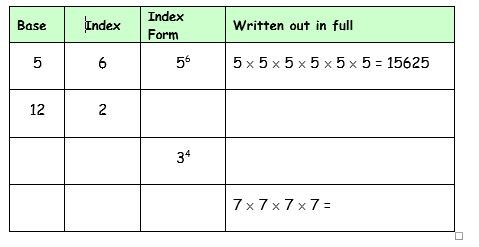
Complete the following table:
3C: Real Life Application (15 minutes)
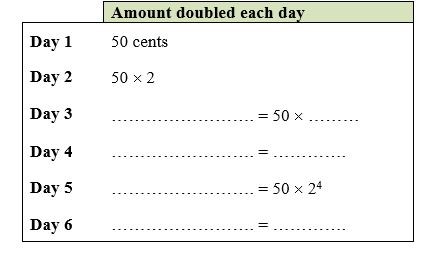
Question 1 - You are offered 15 dollars now or 50 cents doubled each day for 6 days.
Complete the table below, work out a pattern and write down which offer you would take.
Question 2 - You are offered $500 dollars now or 10 cents doubled each day for 2 weeks (14 days).
How much money would you make?
Write down your answer and which offer you would take.
(Disclaimer: The teachers are not offering you either – sorry)
*Optional: How much money would you make over a month? A year?
Wellbeing:
Resilience, Rights and Respectful Relationships ‘Positive Coping’
Learning Intentions:
To use positive coping strategies during challenging times
To use positive messages to encourage personal motivation
Task 1: Positive Coping Strategies at Home (20 minutes)
In recent weeks, we have faced the new challenge of home isolation and learning from home.
This will mean different challenges for different people. Some of us will enjoy the opportunity be learning in a different way, whilst some will find the challenge of having to work at home really difficult without our teachers and friends.
Consider how this period has been for you.
How have you used positive coping strategies over the past few weeks?
What has worked well for you?
What do you do when you are faced with something difficult in the home learning environment?
Has your thinking changed?
Could you offer a suggestion for others?
Have you been able to make any permanent changes in your mindset, thinking or responses to problems?
Write a reflection of your thinking from our Wellbeing sessions from the beginning of term 2
Task 2: Motivational Phrase (40 minutes)
Our whole class focus this week is on MOTIVATION which can be difficult when faced with challenging situations, like learning from home and feeling isolated from family and friends.
We will each feel motivated to do different things, including the way we structure our day. Some people like to get the more challenging tasks out of the way first and then focus on the things that they enjoy more. Some people put off the challenging things until last! We are all different.
Something that can be really helpful is thinking of a motivational phrase which we can use when we are finding it difficult to get motivated.
Mrs Sime: Just keep putting one foot in front of the other.
Miss Mahon: If you change the way you look at things, the things you look at change.
Mrs Rovatti: The secret of getting ahead is getting started.
Mr Mottershead: You can steer yourself in any direction YOU choose.
Mrs Hartney: Keep calm and have a go.
Your task this week is to be creative with a motivational phrase that appeals to you:
Create an A4 poster which you will display in your learning from home space.
We will be discussing these in our class meeting on Friday of this week.
When we return to school, we will create a Year 6 corridor gallery of your motivational phrases for everyone to enjoy.
Good luck, we can’t wait to see what you come up with!
Inquiry
Learning Intentions:
To explore different types of natural disasters
To compare the impact of tsunamis on the land and the effect on people
Tasks:
Task 1: Investigating Tsunamis as a Natural Disaster (60 minutes)
This week, we will be focussing on the natural disaster of tsunamis.
We can connect our learning to the learning we have been doing in Science on Earthquakes.
There have been a range of books assigned to you in Epic! You need to read at least 3 of these texts to gain information.
They range in difficulty.
You must include the following information:
- What is a tsunami?
- How is it caused?
- How is it measured?
- How does it affect the surroundings?
You can include other information of interest.
Use the skill of summarising, which we have practised in reading, rather than copying and pasting someone else’s information.
Record your findings in an information report, which you can complete on your computer or hand write.
You must include the names of the books that you read in Epic to source your information.
Task 2: Making Comparisons between Tsunamis (40 minutes)
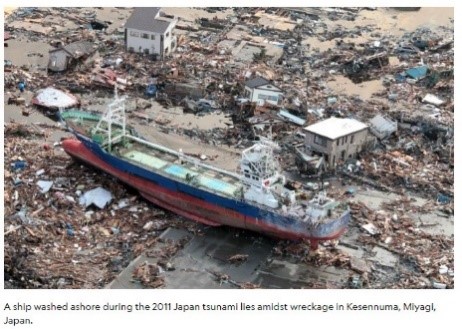
Research the 2004 Boxing Day Tsunami in Indonesia and the Japanese Tsunami in 2011.
Click on each image below to read about the impact each had on people and the surrounding environment:

Record your findings within a Venn diagram.
For a Venn diagram template, click here, or make your own.
Science
Learning Intentions:
To understand earth’s layers
To describe tectonic plate movement
To represent understanding of tectonic plate movement using a plasticine/playdough model
Tasks:
Task 1: Finding Out About Earth’s Structure (40 minutes)
Read ‘Studying our Earth’ in Epic! and then watch the video ‘Look deep, down into the Earth’
(you can stop at 8 minutes 30 but the rest is fascinating too).

Draw a diagram of the Earth that explains its different layers, including information that you know/learn.
Task 2: Making a Model of Tectonic Plate Movement (30 minutes)
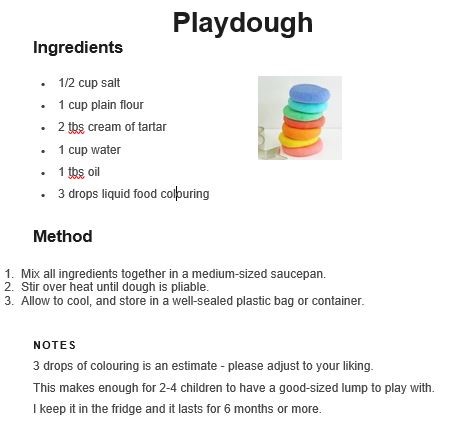
You will need plasticine or playdough for this task.
*If you don’t have any, a recipe to make playdough is at the end of this week’s Learning From Home (check with an adult as cooking is involved).
The plasticine/playdough will model the movement of tectonic plates.
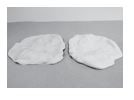
Flatten two pieces of plasticine/playdough, making pieces approximately 1.5cm thick.
Plasticine/playdough pieces with rough edges and differing thicknesses within each piece will create a more accurate model.
Make a table (like below) to record your observations in your home learning book.

Part 1.
- Place the two pieces of plasticine/playdough on a flat surface and gently push them directly towards each other.
- Observe and describe changes at the edges of the plasticine/playdough pieces.
Fill the table in and then flatten your plasticine/playdough pieces as they were originally. - Start with the two pieces pushed together this time, and then gently pull them apart.
Observe and describe changes at the edges of the pieces.
Fill the table in and then flatten your plasticine/playdough pieces as they were originally. - For your last observation, instead of pushing the pieces towards each other, move them past each other with their edges rubbing together as they move past.
Observe and describe changes at the edges of the pieces.
Fill the table in and then flatten your plasticine/playdough pieces as they were originally.
Part 2.
- Place a set of small stacked blocks on top of the plasticine/playdough at the point where the two pieces meet.
The blocks represent a building and demonstrate what can happen to it during an earthquake.
Observe what happens to the building when you repeat each movement (same as in Part 1) and complete the table.
Part 3. Read pages 6 and 7 in ‘Super Simple Earthquake Projects’ in Epic!
Explain how your observations in this task relate to earthquakes. Use the scientific terminology used on the pages.
Specialist Classes:
Click here for the Specialist options
Self Reflection: Motivation (20 minutes)
- Rate your level of motivation this week out of 10.
- Were you more motivated for some tasks than others? Why?
- What helped you stay motivated?
- How did your quote help?
- What are you going to maintain/change next week to help you stay motivated?
*Maths Worded Problem Solutions:
- 6 hours 1. 69 cards 3. 59 4. 60 students 5. $3
© Copyright Laburnum Primary School