
Year 5 Learning from Home Week 5
Week beginning - Monday 11 May 2020
Welcome to Week 5! Well done on your focus and effort so far.
This week we will be doing some virtual travelling!
We will visit the National Library of Australia and the Australian Museum.
We will also visit Indigenous Australian Dreamtime.
We will travel to other countries to compare them to Australia and blast off into outer space (all without leaving your LFH study area of course!).
Complete all work in your workbook or on study paper.
Please write the date, topic and lesson title at the top of each piece of work, so that we can provide relevant feedback at a later date.
Our Focus for this week is Integrity.
Ways that you could show integrity in your learning:
- Completing a full hour of independent reading each week.
- Setting up your learning space and keeping it neat and tidy each day.
- Doing your best in every task.
Did you spend a decent amount of time?
Is it your neatest work?
Is there further reading or research you could do? - Are you having a positive impact in your home environment?
Are you supportive and helpful to your family? - Are you doing the right thing even when no one is watching you?
Reading
Learning Intentions:
We are learning to summarise fiction texts using the ‘Somebody Wanted But So Then…’ strategy
We are learning to compare and contrast summaries
Each Week - Continue to do a total of 60 minutes of Just Right Reading over the week.
Record your reading in your Student Diary- title, page numbers, genre and time spent reading.
Try to build your stamina (how long you can read for without taking a break) each day.
Premier’s Reading Challenge :
Participate in the Premier’s Reading Challenge by logging in and registering.
You will need your parents to assist you, as you need to use their email address in order to receive your password.
Click on Challenge Application and then click on ‘Home Based Reader’ tab.
You will need to use your parents’ email address for remote access from home.
Fill in all the information needed to receive your log in details.
You cannot log in on the School/Student tab because you are learning from home.
Shared Class Novel: (10 minutes)
Continue to listen to our class novel on Epic! ‘The Invention of Hugo Cabret’ by Brian Selznick.
Listen to Part One, Chapter Four ’The Window’ (2:28).
‘Somebody Wanted But So Then…’ Strategy : (40 minutes)
A summary covers the main points in the text in your own words and shows that you have understood the story.
As readers, it is important to summarise what we read so we can remember, organise and understand the importance of the text.
Remember, a summary does not include your opinion or unnecessary information.
Listen to ‘Midnight at the Library’ by Ursula Dubosarsky on Story Box Library
(Note: ‘Midnight at the Library’ was created to help celebrate the 50th anniversary of the National Library of Australia, which was opened in 1968.)
Summarise the story using the ‘Somebody, Wanted, But, So, Then’ strategy.
You need to write a sentence or two to describe each of these elements, then combine them into a paragraph.
This makes your summary!
Remember that when you are writing about the ‘Somebody’, you need to tell us who the main character is, where they are, and the time that this is happening (e.g. year, future, war time, evening, etc.).
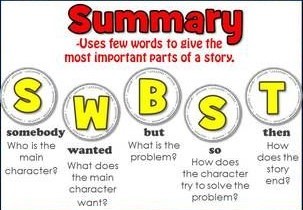
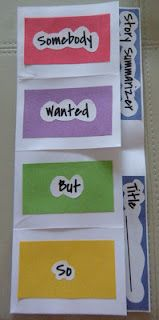
Challenge: Create the flip book pictured and write your sentences behind each corresponding flap.
Effective Summary: (40 minutes)
A summary should include the important details and events of a story.
It should explain why characters do things and how one event causes another.
Read pages 4 to 7 of ‘How the Sun was Made’ on Sunshine Online (login: laburnumps password: laburnumps).
Look in the Indigenous Titles section.
After reading, think about the details you would include in a summary.
Now read the two summaries below.
Which do you think is better?
Explain why in your homework book, referring to setting, character, plot and key words.
Summary One
In the dreamtime, some birds had a fight. One of the birds ran to the other’s nest, stole an egg, bobbed its head three times and dropped the egg. The egg broke, which started a fire. Some spirits thought the fire was good so wanted to make one each day. They made a huge pile of wood to do this. The spirits used a star to show that the light was coming. At the end of the story the spirits ask a kookaburra to sing to wake the sleeping animals.
Summary Two
This is an Indigenous Australian myth that explains how the sun came to be. It is set in the dreamtime in Ancient Australia. Two birds, a brolga and a dancing bird, fight over an egg, and the egg broke, spilling its yolk on a fire, which made a bright, warm light. The light let the spirits in the sky see the Earth below and all the animals. They thought the earth was beautiful, so decided to light a fire in the sky every day. Some animals go out during the day, some go out at night. The spirits used a star to let the night animals know the day was coming. The spirits asked the kookaburra to wake the sleeping animals.
Challenge: This story does not actually explain how the sun was made, but it does contain some information that is true.
Can you list three facts the story teaches the reader?
If you would like to read other Indigenous Australian stories you can find some here.
Summarising Our Class Novel: (40 minutes)
Listen again to the first four chapters of the class novel- ‘The Invention of Hugo Cabret’ on Epic!
Take note of the important details - such as character, setting, time, plot and mood.
Use the strategy ‘Somebody Wanted But So Then…’ and write a summary of what has happened so far.
There are some mysteries that have not been revealed yet; how will that affect your summary?
Challenge: Respond to these statements about each chapter-
Part 1 Chapter One - The Thief: Describe how the value of integrity is presented in this chapter.
Part 1 Chapter Two - The Clocks: Explain how and why Hugo manages the time for the station.
Part 1 Chapter Three - Snowfall: Use the visualising strategy to draw the old man’s home using the descriptive words used in the text.
Part One, Chapter Four - Record a prediction about what will happen next.
Summarise a Just Right Fiction Text: (40 minutes)
Read your own choice of Fiction Just Right Book.
Select a book that is important to you and that you loved reading.
As you finish each chapter, write a brief summary of the key points from that chapter.
Challenge: Write a book review recommending the book to your friends.
Include the following:
- a short summary of what the book is about
- examples of why you think it is well written
- comments on how it has been illustrated
- the reasons why you enjoyed reading the book so much
Writing
Learning Intentions:
We are learning the components required to write a procedure
We are learning to use action verbs to accurately describe procedural steps and create commands
We are learning to write an imaginative text that follows the structure of a procedure
Tasks:
Following a Procedure: (40 minutes)
(Answers to questions are found at the bottom of the page, under self-reflection. Remember to use integrity!)
In your book, answer the following questions:
- What is a procedure?
- Why do we have procedures?
- When do we use them?
List some procedures that you do every day (brushing your teeth, for example).
Look at the Procedural text below.
List all the features that you can see or remember that need to be included (e.g. title).
How to Wash your Dog
What you will need:
*A large basin
*A large towel
*Dog shampoo
*A dog brush
*A small bucket
*A dog treat
What to do:
- Gently take off your dog’s collar and place it somewhere safe.
- Fill a large basin or sink with warm water.
- Carefully place your dog into the water.
- Scoop some water into the small bucket and pour it over your dog.
- Squeeze some dog shampoo into the palm of your hand.
Gently massage the shampoo all over your dog.
Do not put any in your dog’s eyes. - Use the small bucket to rinse all of the shampoo off your dog.
- Slowly pick up your dog and wrap it in a towel.
Dry your dog. - When your dog is dry, carefully brush your dog’s hair until it feels soft.
- Give your dog a treat as a reward for having a bath.
Challenge: Look at the map you created of your house in Week Two and write down procedures you would need to follow to complete a simple task in each room. e.g. bathroom- ‘How to brush your teeth’.
Interesting Verbs and Commands: (40 minutes)
When writing Procedures we use a type of sentence called a command.
A command can sound bossy because you begin with a verb. For example, ‘Clean your room’, ‘Finish your homework’ or ‘Brush your teeth’.
By beginning with a present tense verb it makes the sentence strong and you feel you must do what you are told!
We start commands with precise and interesting verbs to give clear instructions,
just like in yesterday’s procedure, ‘How to Wash Your Dog’.
You should avoid boring verbs such as get, use, put, go or make.
Verbs such as cut, hold, combine, and run give a more exact instruction.
Make a list of 15 interesting verbs that you apply to things you do at home.
Rewrite the sentences below as commands with interesting verbs that help the reader complete the instruction:
- The cake needs to come out of the oven with an oven mitt.
- Can you put the basketball in the hoop?
- Please make a fold in the paper.
- Can you use a paper towel to clean up?
- I would like this room tidy.
Play Simon Says with your family and make your verbs really specific.
e.g. don’t say ‘Turn around’ instead, say ‘Spin 360 degrees on the spot’.
Plan your instruction before the game by writing at least 5 key verbs in your book.
Challenge: We can make our verbs even more specific with adverbs.
An adverb describes how you do a verb, such as 'carefully cut’, ‘silently walk’ or ‘quickly pour’.
Add adverbs to your commands to make them even more descriptive.
‘How to Make Me’ Procedure: (40 minutes)
It’s time to write your own procedure. It will be all about YOU!
You are going to write imaginative instructions about how to ‘make’ you, as if you were a cake made of batter!
What ingredients would need to go into the batter?
You need to think of what values you represent and what makes you so special.
Do you have Integrity? Curiosity? Are you kind?
For example, to make Mrs Richards we would need to mix together 3 cups of kindness, a sprinkle of creativity, and so on.
Your writing needs to be set out using the correct structure of a procedure with a title/goal, ingredients and method/steps.
Refer to the ‘Washing your Dog’ procedure above for an example of structure.
Challenge: Write a procedure about ‘How to Make’ someone in your family or a close friend.
Personal Choice Writing: (40 minutes)
You can choose to write a comic, letter, narrative, diary entry, a recount or another type of writing that interests you.
You can choose to write a procedure (keep in mind that we will be writing more procedural texts next week).
Write a different text type to last week!
Make sure your handwriting is neat and you edit your work when you have finished.
Challenge: Include a variety of interesting verbs in your writing.
At the end, highlight all of these verbs.
How many different ones did you use?
Beginner: 0-5 Verbs
Intermediate: 6-10 Verbs
Advanced: 11-15 Verbs
Expert: 16-20 Verbs
Spelling
Learning Intention:
We are learning the etymology of the planets in our solar system
We are learning to use possessive nouns
Tasks:
How the Planets got their Names: (10 minutes)
Investigate and match the planet to its name-sake.
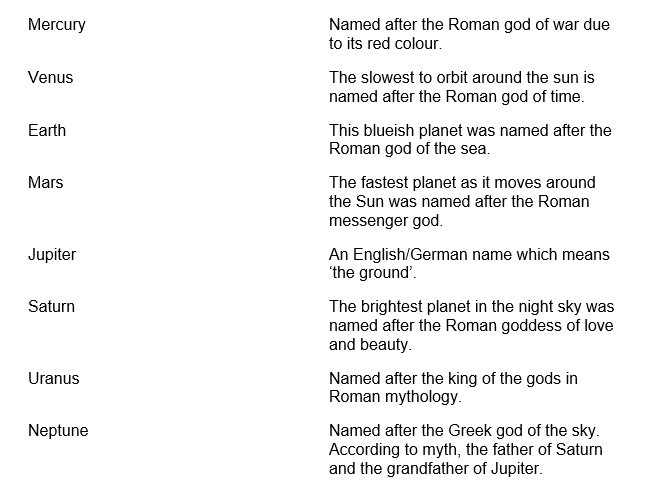
Challenge: Pluto used to be counted as a planet but recently has been re-categorised and is now deemed to be a ‘dwarf planet’.
What was Pluto named after?
(Hint: It’s not Mickey Mouse’s dog!)
Maths
Learning Intentions:
We are learning to automatically recall our times tables
We are learning to find the perimeter and area of rectangles and squares
We are investigating mapping, using grid referencing
We are learning to calculate elapsed time
Tasks:
(Answers to questions are found at the bottom of the page, under self-reflection. Remember to use integrity!)
Daily Warm up: Times tables (5 minutes) Ongoing Work
Continue to build your multiplication skills with the help of your family.
A resource you might like to use is this ABC education site, Multiplying.
Find the Perimeter and Area: (40 minutes)
Perimeter is the measurement of the outside of a shape.
If the shape was a paddock, the perimeter would be the fence.
It is measured using normal units of length such as centimetres and metres.
Area is the measurement of the total 2-dimensional surface space.
If the shape was a paddock, the area would be the field where the grass grows.
It is measured using units of length squared, such as cm2 and m2.
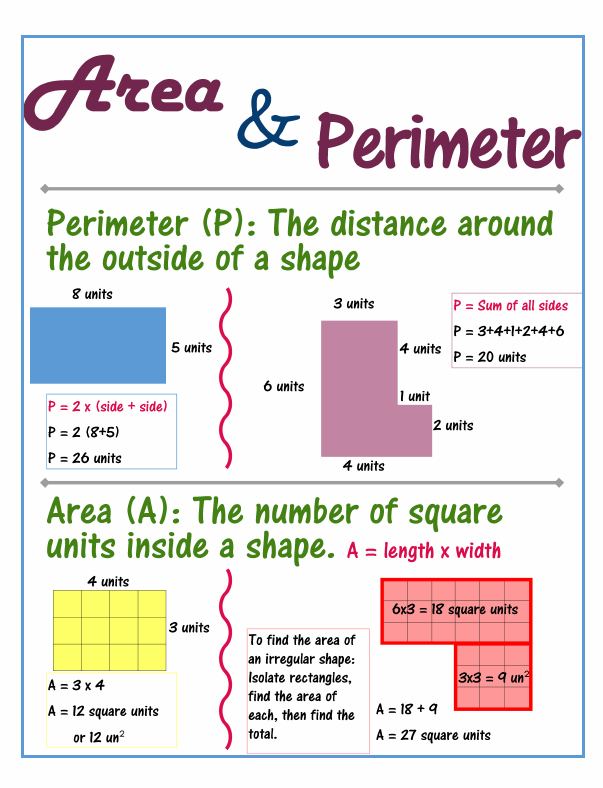
Can you answer the following perimeter problems?
- Find the perimeter of these shapes:
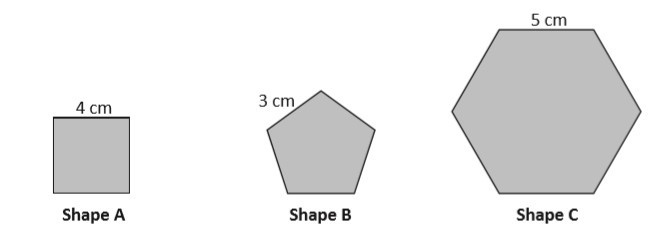
- Draw a rectangle with a perimeter of 30cm.
- The perimeter of the rectangle below is 34cm. Find the missing lengths of the sides.

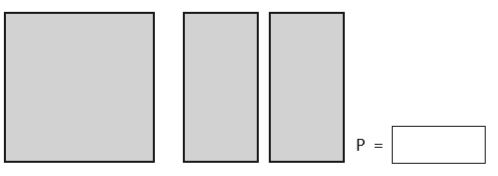
- The perimeter of the square is 32cm. When it is cut in half, we get two identical rectangles. What is the perimeter of one rectangle?
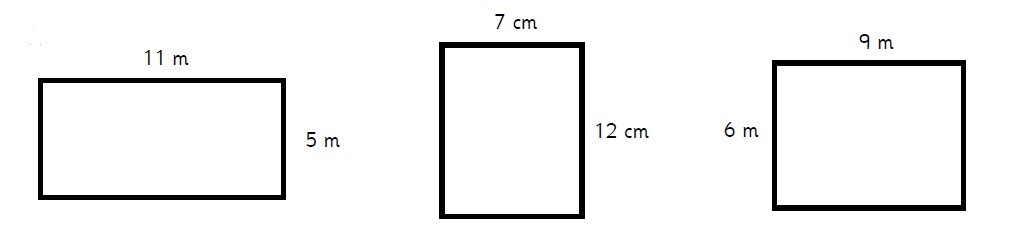
Can you solve the following area problems?
- Find the area of these three rectangles:
- Which shape below has the largest area?
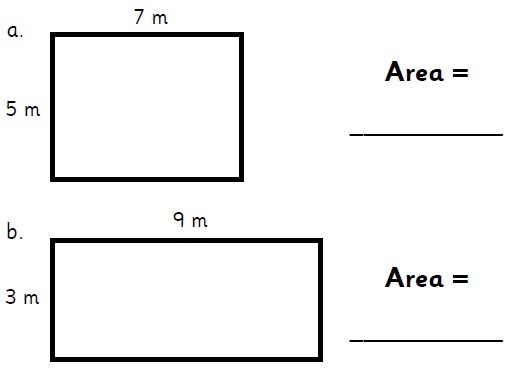
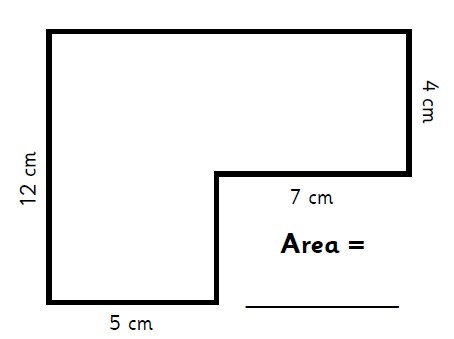
- Find the area of this shape (Hint: Think about breaking it into rectangles).
Challenge: Read ‘Perimeter, Area and Volume’ on Epic!
What new information did you learn?
Answer the quiz questions.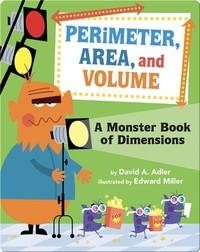
Mapping Revision: (40 minutes)
In your workbook record your answers to these questions:
What is a map?
Why do we need them?
Who uses maps?
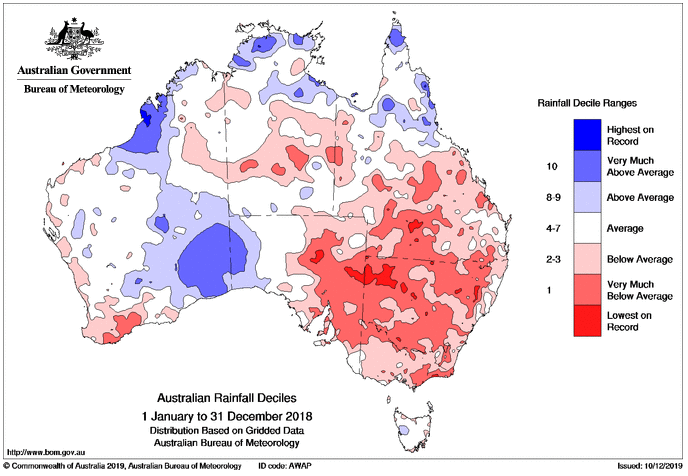
Closely read the map below and answer these questions about it.
(Info: A decile is a comparison using a scale of 1 to 10)
What is the title of the map?
When was the map produced?
Who produced the map?
How do you think it was made?
What features do you see on this map? Make a list.
What is the purpose of the map?
Challenge: Research and write - What was the earliest map made?
What does it show?
Who was it made by?
Why?
Elapsed Time: (40 minutes)
Information - Elapsed Time is the amount of time that passes between two events. You can use a number line strategy or the mountain strategy to help solve these problems.
- Ms Farlow arrives at the doctor’s office at 2:30 pm. She sees the doctor at 3:10pm. How long was her wait?
- Mr Marikar tells his wife that dinner will be ready in 35 minutes. It’s 5:30 pm now. What time will dinner be ready?
- Mrs Keogh is meeting her friend at the library at 12:45 pm. It takes her 25 minutes to get to the library. What time will she need to leave her house to arrive on time?
- Señora Mason put cupcakes in the oven at 3:41 pm. The directions say that the cupcakes need to bake for 38 minutes. What time will she need to take them out of the oven?
- Mrs Yue-Lamb arrived at school at 7:59 am. She left at 3:33 pm. How long was Mrs Yue at school?
- Mrs Lienert’s family is traveling from Melbourne to Brisbane by plane. Their flight leaves at 11:15 am and should take 2 hours and 15 minutes. What time will their plane arrive in Brisbane?
Essential Assessment: (40 minutes)
Log into Essential Assessment
Complete the Time assessment (under Measurement and Geometry) on Essential Assessment.
You will need to do this in test conditions. Remember to use integrity!
Have a quiet work area free from distraction.
Do not let anyone help you with this test, we want to see what you know and can do.
Once you have completed the test, log in to My Numeracy (not Sunset Maths) and complete at least one of your target goals.
Inquiry - Climate Comparison
Learning Intention:
To compare the climate of a specific country
To research natural disasters that have affected your chosen country
International Data: (40 minutes)
Choose one of the following countries to compare with Australia:
Peru, Indonesia, Greenland, or New Zealand.
In your workbook, create a T-Chart like the one below, and fill it in for your chosen country, as compared to Australia.
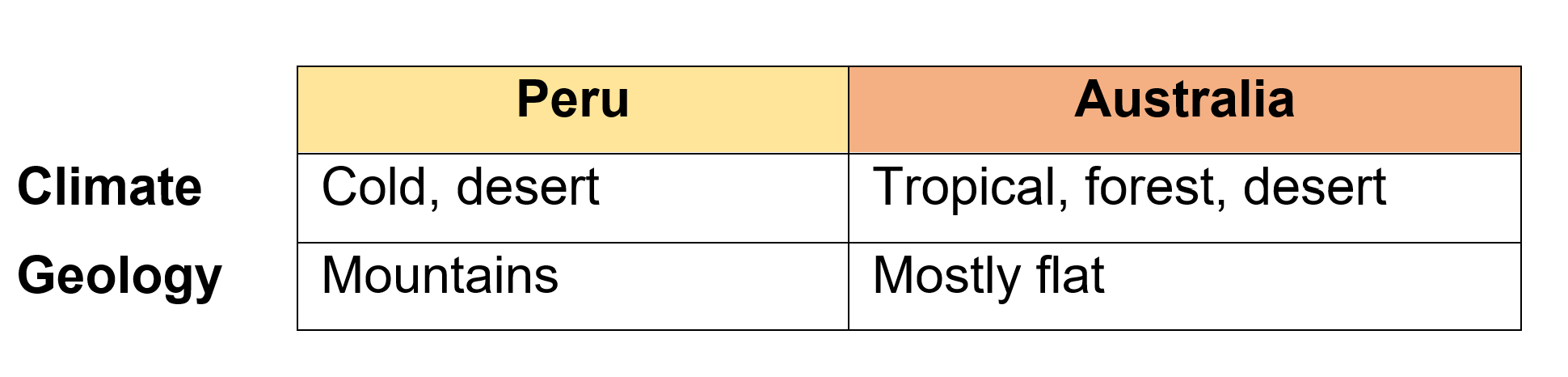
Write about these aspects of the country: Climate (weather), Geology (landscape), Population,
Major population centres (cities and towns).
What natural disasters occur in this country?
What causes these disasters?
How has the natural disaster impacted the country?
Include a sketch map of the country.
Challenge: Research how your chosen country responded to the disaster.
Is the disaster likely to happen again?
Is the country prepared for the next time?
Science
Learning Intentions:
We are investigating the Earth’s rotation and tilt
We are explaining why Earth has different seasons
Information: Did you know the earth is titled?
How could a sphere/ball be tilted?
It spins around a central point, but not straight up and down i.e. north doesn’t face directly up and south doesn’t face directly down.
One theory is that when the Earth was forming, it was struck by a massive object.
This sent matter into space that would become Earth’s moon, and also tilted the Earth so it has been spinning on a 23.5 degree angle ever since!
You can travel to the Australian Museum for optional further reading here!
Draw a Diagram: (20 minutes)
Read the information below.
In your workbook, draw the sun, earth and moon when it is winter in Australia, and when it is summer in Australia.
Remember that Australia is in the Southern Hemisphere. Label your diagrams.
Diagram 1
This shows Europe in summer and Southern Africa in winter. Now there will be more sunlight shining on the Northern Hemisphere.
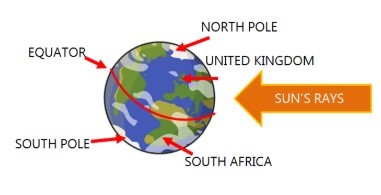
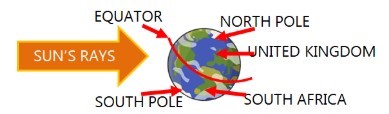
Diagram 2
Summer in the Southern Hemisphere is caused by more direct sunlight shining on to it.
This shows that while it is winter in the Northern Hemisphere it is summer in the Southern Hemisphere as there is more sunlight shining on that hemisphere.
The Northern Hemisphere is in winter while Southern Africa, which is almost directly below but the Southern Hemisphere is in summer because it has more sunlight shining.
Reasons for the Seasons: (30 minutes)
Answer the following questions in your own words.
You will need to research online.
Remember to be cyber safe and consider the reliability and appropriateness of the websites you choose.
Use full sentences and paragraphs (3-4 sentences per response):
- What causes the different seasons?
- Why is summer hotter than the other seasons?
- Why do Australia and America not have the same season at the same time?
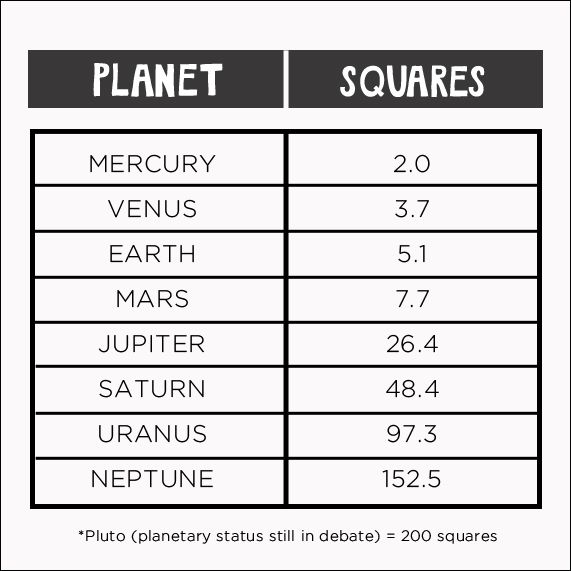
Challenge: Have you ever thought about how far apart the planets really are from the sun?
In most images they are shown much closer together than they actually are.
Follow the instructions in this fun NASA activity to see the amazing distances our solar system covers!
Wellbeing:
Resilience, Rights and Respectful Relationships ‘Positive Coping’
Learning Intention:
We are learning to use positive coping strategies during challenging times.
Positive Coping Reflection: (20 minutes)
In recent weeks, we have faced the new challenge of home isolation and learning from home.
This will mean different challenges for different people.
Some of us will enjoy the opportunity to learn in a different way, whilst some will find the challenge of having to work at home really difficult without our teachers and friends.
- Consider how this period has been for you.
- How have you used positive coping strategies over the past few weeks?
- What has worked well for you?
- What do you do when you are faced with something difficult in the home learning environment? Has your thinking changed?
- Could you offer a suggestion for others? Have you been able to make any permanent changes in your mindset, thinking or responses to problems?
- Write a reflection of your thinking from our Wellbeing sessions from the beginning of term 2.
Mindful Drawing - (Optional)
Last week, Mr Arnott shared some of his artwork with us.
This week you can choose to make some of your own colouring sheets.
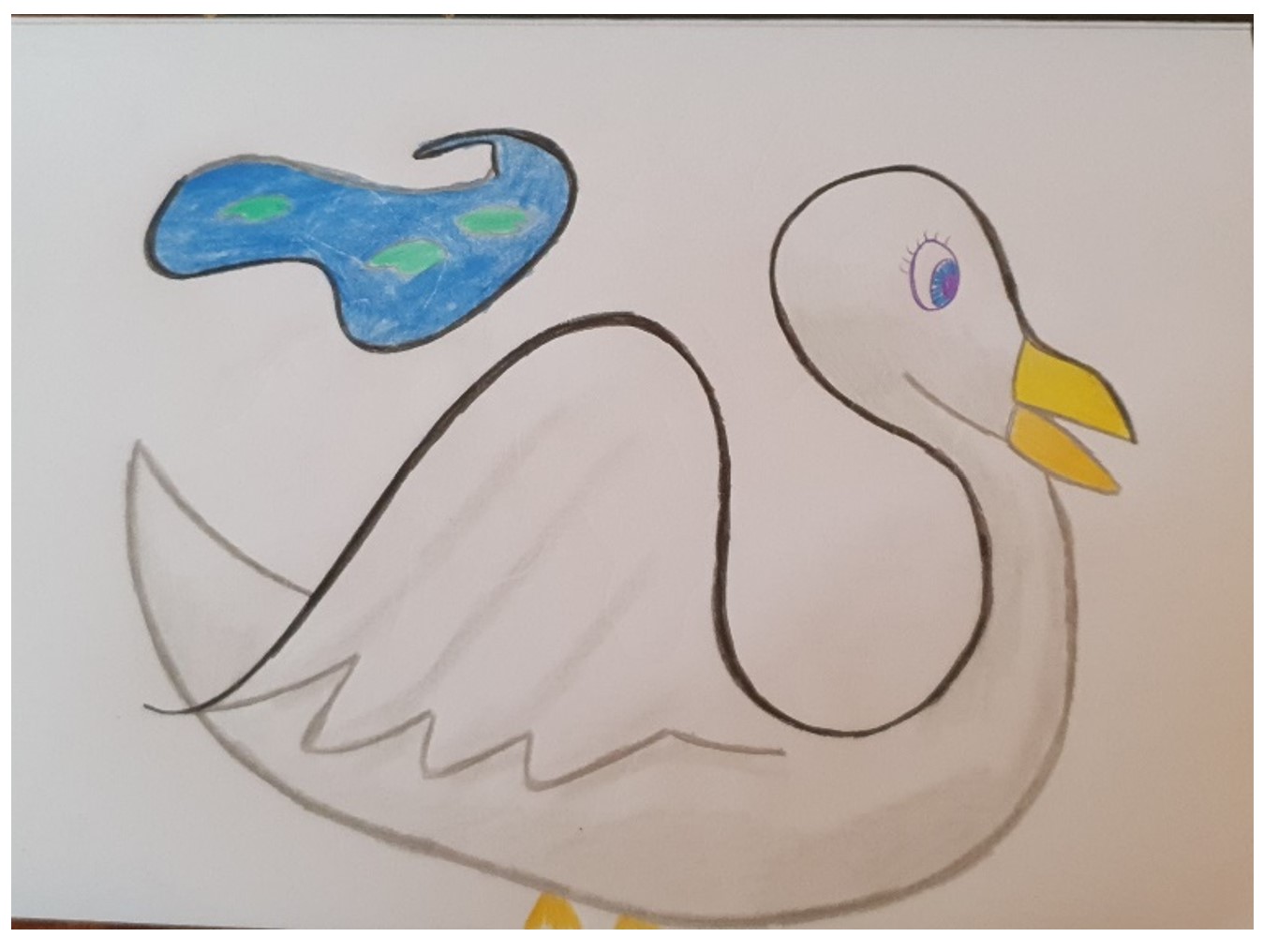
You can do this easily by simply drawing a squiggle on a page and then looking for shapes to make into a picture!
An example is below. Miss Cook drew a couple of squiggles in black pencil and then filled in the rest with her imagination.
Specialist Classes:
Click here for the Specialist options:
Self-reflection:
Draw a short comic strip of 3-4 panels in your book to show at least one way that you have demonstrated Integrity this week.
Answers for Week 5:
Reading
How the Sun was made:
Summary Two is a better summary of the text.
It explains the type of text, the setting and the characters.
Both summaries say that the spirits want to light a fire each day but only Summary Two explains why, which is that they thought the earth was beautiful and wanted to see it each day.
Summary One gives too much unnecessary detail, such as the bird’s dancing before dropping the egg, and the pile of wood.
Challenge answer:
Facts you may have picked up from the story -
Brolgas have large eggs,
dancing birds will steal other bird’s eggs to eat,
there is a morning star that appears before daybreak,
some animals are awake at day, some at night and the kookaburra sings at dawn.
Indigenous Australians used their myths to teach their children real, useful facts about the world around them, even if the stories themselves were not scientifically accurate!
Writing
Following a Procedure
What is a procedure? Procedural texts are a type of information text that teach us how to do or make things. Anything!
Why do we have procedures? We use procedures to pass on skills and abilities.
When do we use them? When we need or want to learn how to do something we haven’t done before or that we need to improve on.
List some procedures that you do every day:
All recipes,
instructions,
directions and rules are procedures.
For example,
the instruction booklet that comes with your LEGO set,
a medical textbook with directions for how to perform First Aid,
a recipe teaching you how to make pancakes, and many more.
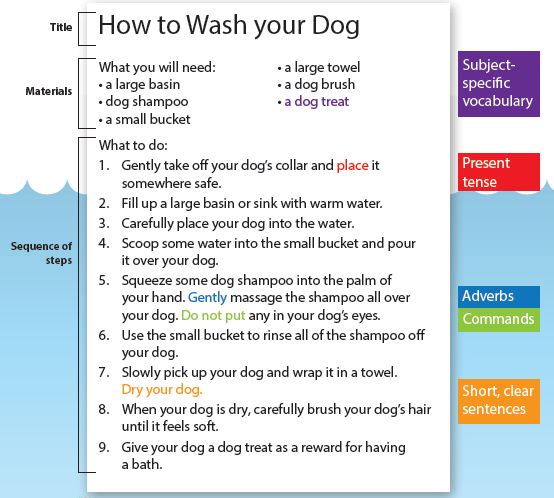
Look at the Procedural text below. Identify and label all the features that you can:
Title = A clear statement about what you are going to do or make.
Materials = A list of items that you will need to complete the task.
Sequence of Steps/Method = A series of ordered steps explaining how to complete the task.
Subject-Specific Vocabulary = Words specific to the task you are completing. They are not generally used for other subjects.
Present Tense = Action verbs (doing words) that tell you what is happening right now; not in the past or the future.
Adverbs = Words that describe verbs.
Commands = Telling the audience directly what to do or not do.
Short, clear sentences = The purpose is to inform your audience, not to entertain them.
Maths
Elapsed Time
- 40 minutes
- 6:05 pm
- 12:20 pm
- 4:19 pm
- 7 hours and 34 minutes
- 1:30 pm
Perimeter and AreaCan you answer the following perimeter problems?
1. Find the perimeter of these shapes:
Shape A - 16cm, Shape B - 15cm, Shape C - 30cm
2. Draw a rectangle with a perimeter of 30cm.
Your rectangle could be 1cm x 14cm, 2cm x 13cm, 3cm x 12cm, 4cm x 11cm, 5cm x 10cm, 6cm x 9cm or 7cm x 8cm.
3. The perimeter of the rectangle below is 34cm. Find the missing lengths of the sides.
The missing sides are 5cm each.
4. The perimeter of the square is 32cm. When it is cut in half, we get two identical rectangles. What is the perimeter of one rectangle?
The smaller rectangles have a perimeter of 24cm (2 sides of 8cm, 2 sides of 4cm)Can you solve the following area problems?
Find the area of these three rectangles:
5m x 11m = 55m2 7cm x 12cm = 84cm2 6m x 9m = 54m2
Which shape has the largest area?7m x 5m = 35m2 3m x 9m = 27m2
Shape a) is bigger.
How would you find the area of this shape?
A great strategy would be to split the shape into two easy rectangles.The overall area of the shape is 88cm2
Mapping:
In your workbook record your answer to these questions:
What is a map?
A way of representing an area using symbols, shapes and colours for landmarks and features.
Why do we need them?
Maps help us find our way to new places or plan travel.
Who uses maps?
Ordinary people use maps to travel, pilots and captains use maps to plan routes, explorers and tourists use maps to avoid getting lost.
Closely read the map below and answer these questions about it.
What is the title of the map?
Australian Rainfall Deciles
When was the map produced?
2019 (dates are at the very bottom)
Who produced the map?
Australian Bureau of Meteorology
How do you think it was made?
It was made using computer software.
What features do you see on this map? Make a list.
You may have included - A heading, dates, a key, state borders and the creators of the map.
What is the purpose of the map?
To show how much rain fell over a year in Australia.
© Copyright Laburnum Primary School