
Year 3 Learning from Home Week 3
Week beginning - 27 April 2020
REMINDER for this week:
- If you have not already accessed Essential Assessment and completed your ‘Pre-Assessments’, please do so this week. If you have completed these assessments already, could you also please check to see if your classroom teacher has allocated an additional assessment for you to complete. It is important that you have completed these ‘Pre-Assessments’, as activities set as part of ‘My Numeracy’ rely on these assessments being completed.
- Click here to access Essential Assessment and then type in the school code (LPS3130), your username and password. Your log in details are found in the front of your reading log or the front of your homework book.*If you do not have your log-in details, please ask your parents to email the office, directing your ‘request for log-in details’ to your classroom teacher.

Reading and Writing
Learning Intentions:
We are learning to retell the main events in fiction books.
We are learning to identify the outside characteristics of a character.
These activities need to be completed in your homework book.
Tasks:
- Don’t forget to read your ‘Just Right’ text for at least 30 minutes and log this on your log sheet.
- For Reading this week we will be looking at a text that is all about ANZAC Day. ANZAC Day is Australia and New Zealand’s national day of remembrance for all soldiers who have fought and died in wars and conflicts around the world. Every year on the 25th of April, people in both countries gather for services at dawn, as well as for parades and ceremonies throughout the day. While this year there will not be any public dawn services and parades, April 25 is still a great time to pause, reflect and remember all of the Australian soldiers, and other people, who have participated in Wars around the world.
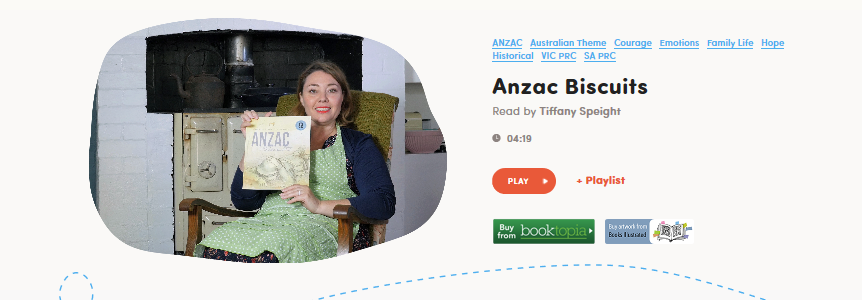
- Click here to listen to the story ANZAC Biscuits from Story Box Library (Remember - Login: lpsstories password:lps1). Retell this story to a family member using ‘the Story Retelling Rope’ from last week, OR write your retell of the main events in full sentences. Remember to include the setting, characters, problem, beginning, middle and end.
(30 minutes) - Once you have written your retell, write the names of the three main characters from ANZAC Biscuits (Mother, Daughter, Soldier) and listen to ANZAC Biscuits for a second time. As you listen to the story again, write down some words under each character’s name that you would use to describe each of the characters. Some suggestions for example, what does the soldier look like? What clothes does he wear? For each character, try to have 5 – 10 adjectives (describing words) written down that describe what each character looks like.
(30 minutes)
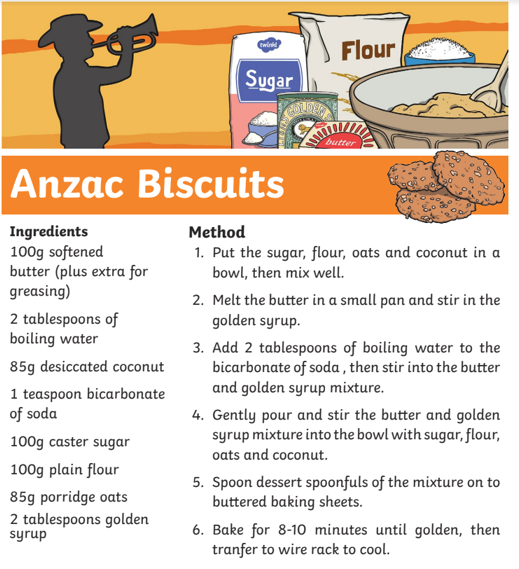
- Follow the recipe above to have a go at making your own ANZAC Day biscuits (this must be done with a parent or carer). (30 minutes)
-
Once you have made your own ANZAC Day Biscuits, use the 5 Senses (sight, sound, taste, smell, touch) to write 5 sentences in your homework book describing your biscuits OR if you are unable to make the recipe above, grab 3 coloured pencils and in your homework book: use one colour to write out all of the NOUNS in the recipe, one colour to write out all of the VERBS in the recipe and one colour to write out all of the ADJECTIVES.
(30 minutes)
Spelling
Learning Intention:
We are learning to investigate words that have apostrophes.
Task:
An apostrophe looks like a comma that we place above the line of writing. It takes up the space of a letter. It is used for lots of different reasons.
We use apostrophes to show ownership and belonging. For example, if the house belongs to Robert we would say, Robert’s house. *Remember we use apostrophes for ownership, belonging and contractions, but not for plurals, e.g. cats or toys.
If the noun ends with an s, for example James, we place the apostrophe at the end of the word and don’t add another s. If James owns the car we write James’ car.
- Choose a book (it can be on Epic or one you are reading). Find and write 10 nouns showing apostrophes being used for ownership or belonging, eg. Jane’s mum, girl’s dress, cat’s milk. (30 minutes)
Maths
Learning Intention:
We are learning to complete Essential Assessment Pre-Testing on Addition.
We are learning to record analogue and digital time.
Tasks:
- Complete the Essential Assessment Pre-Test on Addition. Click Essential Assessment to access the link. (If you have not completed any other Pre-Assessments, please make sure you complete those as well!) (30 minutes)
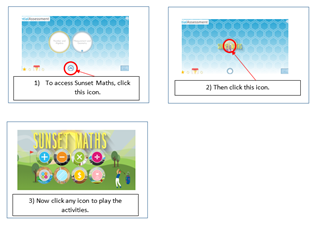
- Once you have completed the Pre-Test, go onto Sunset Maths (as per the picture at the top of the page) and have a go at practising the ‘Addition’ questions. (30 minutes)
NOTE: Please see the top of this page for directions on how to access Essential Assessment. Please email your classroom teacher if you need log in codes.
- Complete the following clocks.
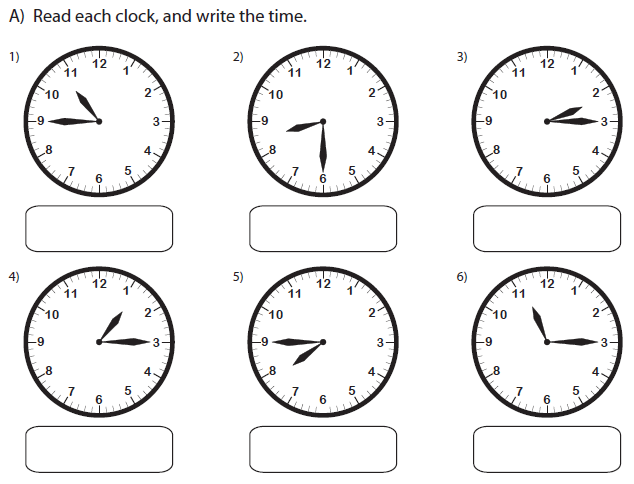
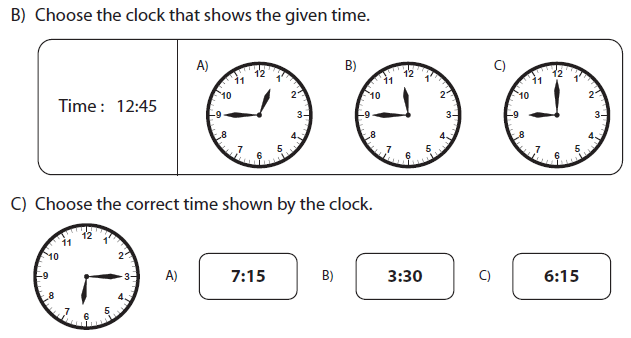
- Once you have completed the above clocks, head back onto Essential Assessment and go to the Measurement and Geometry section. Complete 2 ‘My Numeracy’ tasks related to time.
Inquiry
Learning Intention:
We are continuing to investigate living and nonliving things
Tasks:
Following on from last week, we are going to continue investigating living and nonliving things.
- Click on the following link to access the non-fiction text for a reminder of the difference between living and nonliving things: What is a living thing?
- This week you will be a Home Explorer! We would like you to identify one living and one nonliving thing from your house and the surrounding area.
- Some examples of living things could be, a pet, a house plant or something in your garden.
- A table, T.V. or even a lamp could be some examples of nonliving things.
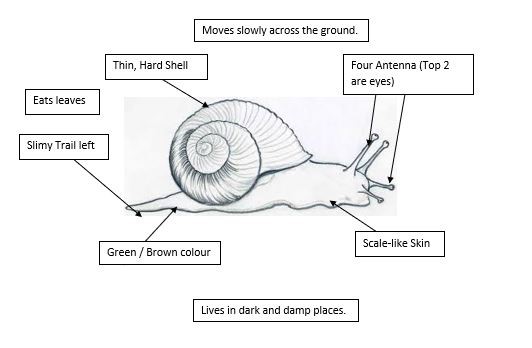
- Once you have found your items, then you will need to draw a picture of them. Make sure your picture is a good size so you can add as much detail as you can. Look carefully at the items as you draw them.
- You will then need to label your drawing. You need to make sure you write about its size, colour, texture, movements (if it has any), temperature, habitat (where it lives / where you found it). An example is shown below: (30 minutes)
Wellbeing
Resilience, Rights and Respectful Relationships ‘Positive Coping’
Learning Intention:
To work cooperatively and energetically.
Task:
- Using the blank games sheet in your Homework book to create your own board game to play with a family member OR find a board or card game you can play with a family member. (30 minutes)
- How will you decide who goes first and what the order should be? What other things do you need to agree on before starting your game? Try to play your game with a positive and energetic attitude. Practise making positive comments to your partner, congratulating them on the game and thanking them for playing with you. Was this a positive experience? Reflect on what you got out of the game with these things in mind.
(30 minutes)
Click here for the Specialist options.
Self-reflection:
Write one thing you have done well this week and explain how you know this.
© Copyright Laburnum Primary School